
Traveling more does not always mean discovering better. The rapid growth of global tourism has heightened economic and ecological imbalances in many destinations. Some regions, once little visited, are now experiencing unprecedented pressures on their natural resources and social fabric.
Alternatives are emerging, driven by local actors and travelers mindful of their impact. This shift in perspective paves the way for concrete practices, often unknown, that help limit the negative effects of travel while promoting positive outcomes for host communities.
Why solidarity and responsible tourism are changing the way we travel
Solidarity tourism is not just about exploring new territories. It disrupts the approach to travel by placing respect and interaction with locals at the center of every step. Far from the marked routes, this philosophy influences every choice: destination, transport, accommodation, or activities. Sometimes, a detail has much more impact than it seems on local balance or environmental preservation.
Promoting sustainable tourism means putting people and the planet at the heart of the journey. A concrete example, to better understand the idea, can be found on the Le Voyageur Solidaire website, which focuses on discovery, direct exchange with populations, and the promotion of biodiversity. Here, there are no standardized stays or getaways disconnected from reality: each step encourages immersion in local practices and supports those who preserve nature and traditions.
At every stage of the journey, responsible attitude translates into choices: favoring low-impact transport, selecting accommodations committed to ecological practices, or opting for activities that highlight natural heritage. These decisions make travel truly meaningful, regardless of the destination.
To move towards truly responsible tourism, here are some ideas to incorporate into your preparation:
- Seek the help of local guides and prioritize the local economy through short circuits.
- Choose accommodations with active water and energy management, identified by credible labels.
- Participate in ecotourism by choosing activities that support the preservation of natural environments.
By changing the approach, traveling becomes more than just a movement: it is an experience where every encounter, every attention paid to nature or local culture, broadens the understanding of the world.
What principles for a journey respectful of populations and the planet?
Taking the turn towards responsible tourism means accepting to step out of the sometimes false comfort of traditional tourism to become an actor, not a consumer. Turning to trains, bicycles, or walking is a concrete way to act on one’s carbon footprint. In the same spirit, selecting accommodations truly committed to waste reduction, responsible water management, or the use of renewable energies strengthens the positive impact of one’s stay every day.
The attention paid to human exchanges makes all the difference. More than just a passage, responsible travel relies on listening and respecting others. Associations and universities of sustainable tourism offer programs, stays, and workshops to raise awareness among travelers and communities about the preservation of nature and cultures. Multiplying these initiatives, here and elsewhere, gives meaning to every discovery.
Here are some concrete actions to move in the right direction and enhance the responsible nature of your holidays:
- Reduce greenhouse gas emissions by systematically favoring the train when the journey allows, especially in France or to explore nearby Europe.
- Rely on truly certified partners, who display verified and recognized commitments for sustainable tourism.
- Broaden the experience with on-the-ground actions: nature visits, practical workshops, ecological projects… activities that allow for learning and real contribution.
Preparing an eco-responsible trip is a process that extends from the choice of itinerary to the smallest actions on-site. Through a series of small decisions aligned with one’s values, a whole journey takes shape, each step leaving behind a positive and visible footprint.
Practical tips and tricks for adopting truly sustainable tourism
Acting even before packing your suitcase ensures that the stay will have meaning from start to finish. Starting by choosing an eco-responsible and certified accommodation allows for influencing good practices: water recovery, short food circuits, transparent energy management, or fighting waste. On the transport side, favoring the train when possible significantly reduces the impact of travel, while exploring on foot or by bike promotes immersion and step-by-step discovery.
To make this approach concrete, some guidelines facilitate planning:
- Inform yourself with reputable specialized guides to identify local projects that highlight heritage and encourage active environmental preservation.
- Limit waste production by departing equipped with reusable bags, a water bottle, or solid products, practical actions that have an immediate effect during the stay.
- Ensure that the selected structures do not engage in greenwashing: question labels, demand proof of commitment, and refuse vague or unfounded promises.
Adopting this approach requires being attentive throughout the stay. Steering clear of saturated sites, discovering alternatives off the beaten path, benefits both the visited territories and their populations. Solidarity tourism embodies this ability to observe, listen, and respect local rhythms while supporting initiatives that advance social or ecological balance.
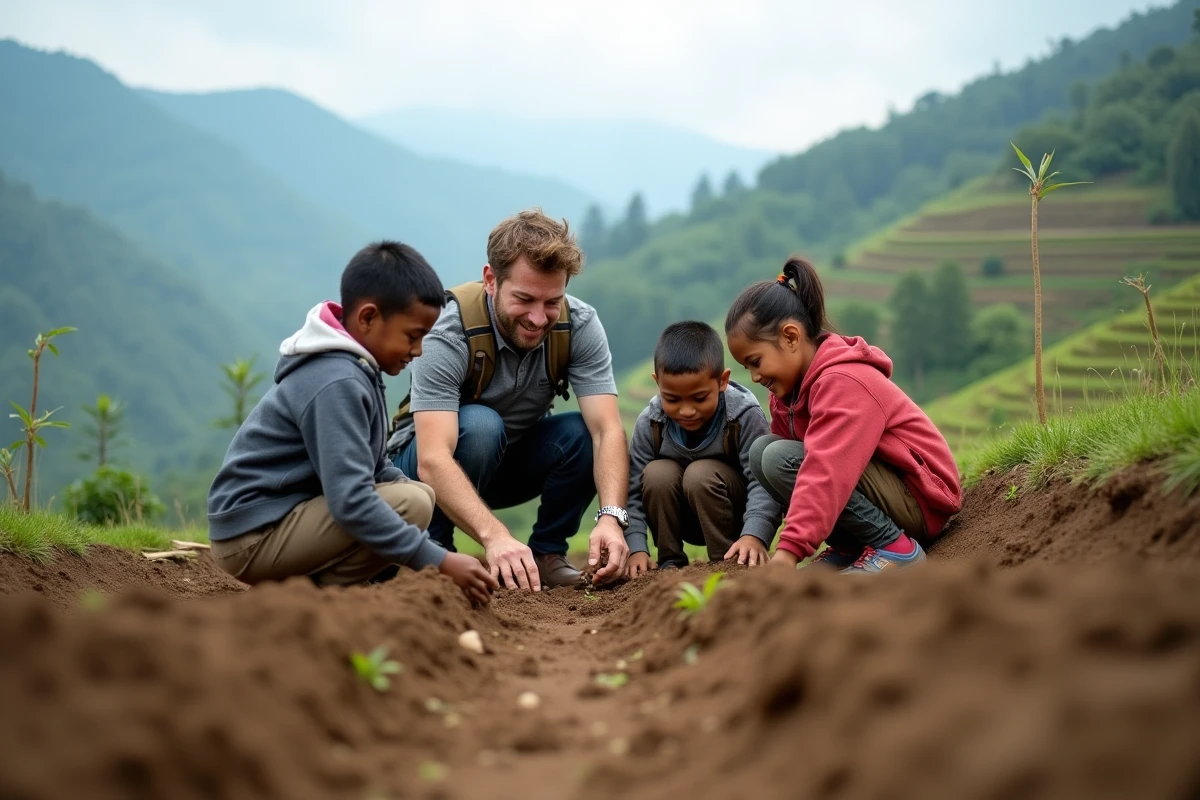
Traveling differently can also mean engaging concretely, whether through associative activities or actions in favor of biodiversity. Each movement thus becomes an opportunity to build connections, share, and contribute, even modestly, to the preservation of local balances.
When leaving a destination, one leaves the land intact, sometimes even enriched, and departs with a renewed vision of discovery: that of tourism that reinvents travel, in service of future generations and territories.