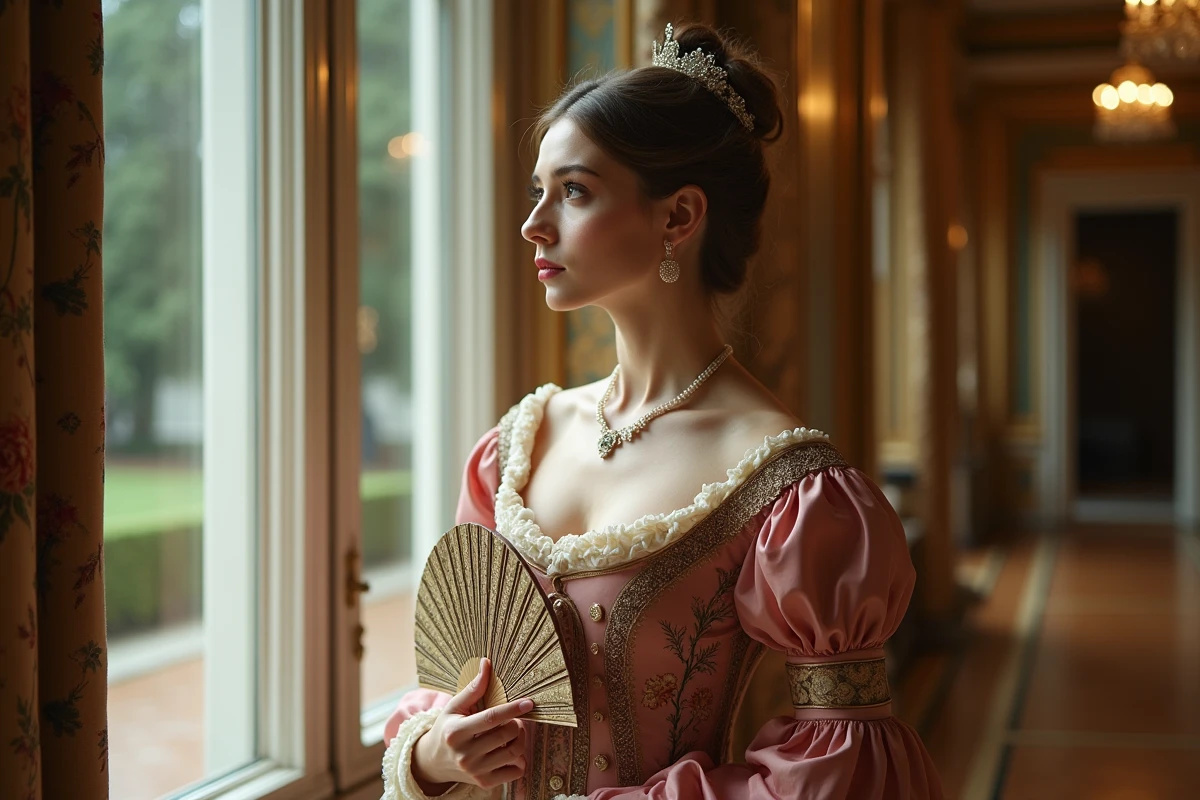
In 1675, the wearing of ribbons was banned for Breton peasants under the threat of heavy fines, while in Paris, the royal court imposed new extravagant fashion every season. However, the royal ordinance did not hinder the growth of the textile trade or the influence of French tailors.
Fashion in France has always refused to conform solely to utility or simple beauty. It stands as a tool of power, draping itself in social symbolism, becoming an economic driver. Each era imposes its codes, whether rigorous or fleeting, but it eludes any attempt at uniformity. It carves its path, untamed, through the centuries.
How Fashion Established Itself as a Marker of French History
In the 17th century, fashion took root in France as a language in its own right: a means of identification, distinction, and sometimes even the exercise of power. Louis XIV, supported by Colbert, made Paris the beating heart of fashion. At court, people were judged by their clothing; every detail mattered, and every fabric became a sign of rank. But the movement did not stop there. During the Revolution, the break extended even into wardrobes: clothing became a statement, attire a position.
The 19th century marked a turning point: the first fashion houses transformed craftsmanship into industry. Paris set the pace, with great names like Worth and Poiret exporting their vision, resonating throughout Europe and beyond. Universal exhibitions stimulated innovation, specialized press flourished, and department stores displayed their windows as promises. The economy thrived on it, from luxury to large-scale textile industry.
Today, Paris’s fashion week, collections at the Palais Galliera or the Museum of Decorative Arts testify to this centrality. Digitalization and social networks are shaking up creation, accelerating the circulation of trends. Platforms such as petit-echo-de-la-mode.fr express the desire to renew codes and carve their own path. Clothing is no longer just a reflection: it reveals, questions, and accompanies a society in perpetual transformation where French fashion combines roots and renewal.
From Royal Salons to Contemporary Runways: Major Milestones and Iconic Figures
The historical journey of French fashion mirrors the rhythm of society. Under Louis XIV, the splendor of costumes and the refinement orchestrated by Jean-Baptiste Colbert made the nascent textile industry shine. The robe à la française embodies the influence of Versailles: a symbol of power that is displayed as much as it is transmitted.
The Revolution reshuffled the cards. Clothing was no longer the privilege of an elite: it became a tool of emancipation, a sign of equality. With the 19th century, the rise of fashion houses, starting with Worth and then Poiret, introduced a new era: one where creation was organized, where cuts liberated bodies, and where women’s fashion broke free from constraints.
The 20th and 21st centuries saw the emergence of a lineage of creators who became legendary: Yves Saint Laurent, Chanel, Balenciaga, Thierry Mugler, Jean-Paul Gaultier. Each, in their own way, disrupted conventions, establishing Paris as an unmissable capital. Fashion shows, museums, Palais Galliera, and Decorative Arts celebrate their audacity. Today, French fashion also engages with social media, sharing its stories, faces, and movements on a global scale.
What Legacies Does French Fashion Transmit to the World Today?
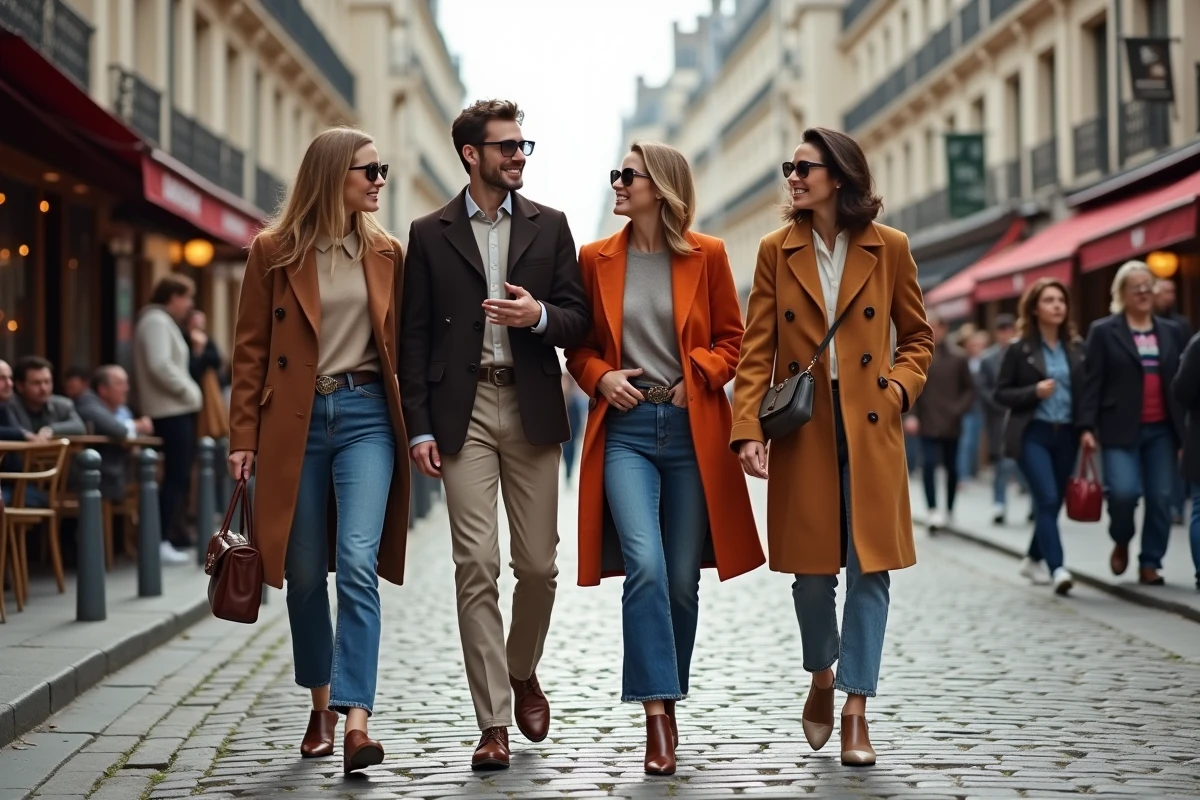
French fashion is not limited to a succession of trends. Around the world, it conveys an inimitable know-how, the result of centuries of experimentation and passion. In Parisian workshops, every gesture counts: the cut of a jacket, the delicacy of an embroidery, the assembly of a dress tell a living tradition, a heritage that continues to be written.
The French scene today makes diversity a founding principle. Inclusion is showcased in campaigns, embodied on runways, and inspires creators. Collaborations multiply, inspirations intersect, and clothing becomes a pretext to question identity and the times. In the face of environmental challenges, the sector innovates: second-hand fashion is gaining ground, reflections on ecological impact are intensifying, and 3D creation and digital technologies are transforming the very conception of clothing.
Here are some of the major legacies of French fashion that continue to shape the international scene:
- Transmission of artisanal know-how
- Promotion of creativity and boldness
- Adoption of new models focused on sustainability
- Radiance of cultural heritage
Consumption patterns are evolving rapidly: a quest for meaning, a desire for authenticity, an aspiration for more responsible purchases. French houses are experimenting, betting on a customer experience enriched by digital data, without ever renouncing their deep attachment to clothing as a singular object. Between tradition and innovation, France continues to spread its aura, inspiring far beyond its borders. As long as fashion remains a territory of boldness, experimentation, and transmission, it will do more than just traverse eras: it will shape them.