This season’s fashion is structured around a clear shift: discreet palettes and minimalist cuts give way to bolder proposals, both in colors and volumes. Understanding this movement allows for the creation of a unique style without randomly accumulating pieces. The autumn-winter 2026 fashion trends redefine the silhouette through coats, texture, and color saturation.
Color-blocking and saturated colors: what spring didn’t announce
The spring-summer 2026 season introduced soft shades, pastels, and butter yellow. The cold season takes a different approach. Several houses (Chanel, Givenchy, Mugler, Chloé, Valentino) are showcasing saturated colors that replace quiet luxury: cobalt, royal purple, rust orange, bright red.
The term to remember is color-blocking, a technique that involves juxtaposing two or three blocks of bold color in the same outfit, without gradients or intermediate patterns. The effect relies on pure contrast. Cobalt pants paired with a rust orange sweater create a visual impact that a monochromatic scheme does not.
To explore fashion on Sklunk, these combinations of bright shades are a good starting point to test combinations before investing in expensive pieces.
This rise in saturation does not mean that neutrals are disappearing. Beige, black, and gray remain functional bases. The difference this season is that the statement piece of an outfit is no longer a discreet accessory but a whole garment in a bold color.
The coat as a signature piece for autumn-winter 2026
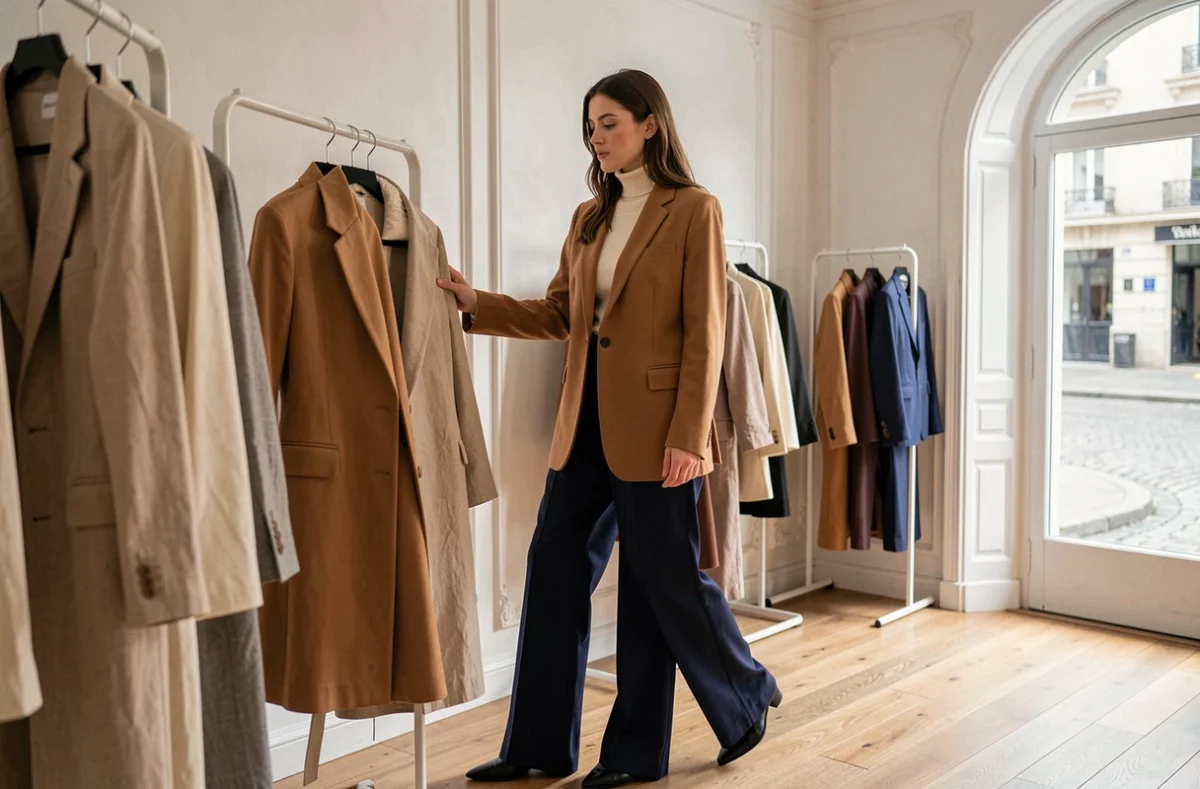
The autumn-winter 2026 collections reposition the coat at the center of the silhouette. It is no longer just a purely functional element worn over an outfit, but the piece that defines the style of the entire outfit.
Specifically, designers are working on the coat through material and construction. Jacquard, quilting, patchwork, heavy textures: the outerwear becomes spectacular. Structured shoulders are also making a comeback, according to RTÉ Lifestyle observations in September 2026.
How to choose a textured coat without a suit effect
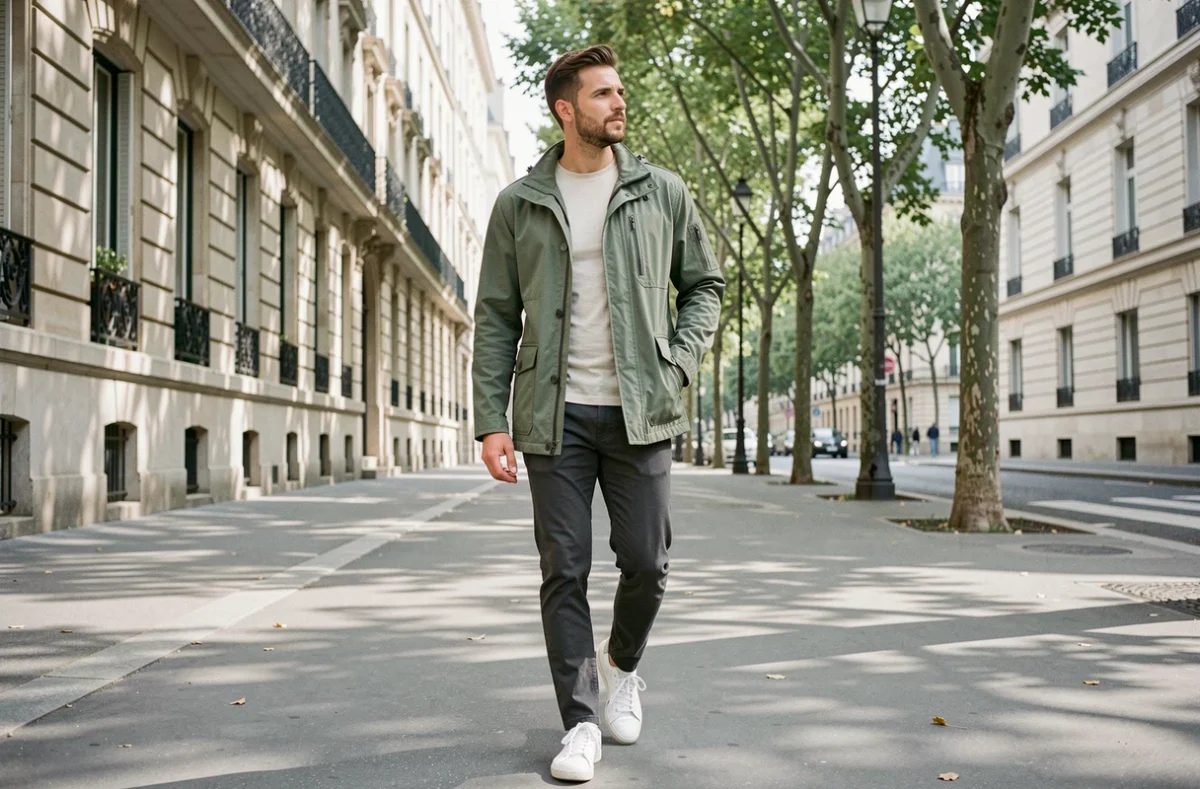
The rule is simple: the more elaborate the coat, the more understated the rest of the outfit should be. A multicolored patchwork coat works with raw denim and a solid turtleneck. The opposite (neutral coat, busy outfit) also works, but mixing two levels of visual complexity creates noise, not style.
- Jacquard or quilted coat: pair it with monochrome bottoms and discreet accessories to let the material speak.
- Coat with structured shoulders: favor fluid pants below to balance proportions and avoid a too rigid silhouette.
- Patchwork coat: limit the colors of the rest of the outfit to one or two shades already present in the patchwork.
The textured coat has a practical advantage: it simplifies daily outfit choices. A strong piece on top makes a basic outfit underneath acceptable.
Maximalism and texture accumulation: definition and limits
Who What Wear, in an August 2026 article, describes the autumn-winter season as dominated by maximalism. This term encompasses three distinct practices that are better understood separately.
The first is the accumulation of textures: layering velvet, leather, thick knits, and satin in the same outfit. The second is the mixing of prints (stripes with floral, for example). The third is the overload of visible accessories (brooches, chains, wide belts).
Successful maximalism plays on only one of these three axes at a time. Stacking all three results in confusion. Choosing texture accumulation while keeping colors subdued and accessories minimal produces a readable and personal result.
Textures to favor this season
Corduroy, soft leather (not patent leather, which is too 2000s), and thick twisted knits form the most coherent trio for building layers. Satin should be used as an accent (a scarf, a top under a jacket) rather than as a main piece.
European textile regulation and wardrobe choices
A factor rarely mentioned in fashion trend guides, yet it influences the pieces available in stores. The European Union is gradually strengthening its requirements around extended producer responsibility (EPR) in the textile sector. European brands are integrating these constraints into their collections, which changes the nature of the garments offered.
Recycled fibers and materials with documented life cycles are gaining ground in the autumn 2026 collections. For consumers, this translates into more detailed labels and, sometimes, slightly higher prices for pieces made from natural or recycled fibers.
This regulatory context gives a concrete advantage to durable and well-constructed pieces. A mixed wool coat with documented traceability will last through several seasons. Investing in a well-made statement piece is more cost-effective than multiplying disposable purchases, and it is now also a choice encouraged by the legal framework.
- Check the composition on the label: blends with more than three different fibers complicate the future recycling of the garment.
- Favor brands that display the traceability of their materials, an indicator of compliance with the new European standards.
- Consider second-hand for trendy pieces with a short stylistic lifespan (a very marked print, a very dated cut).
Building a unique style this season without replacing everything
This season’s fashion trends converge on a simple principle: a strong piece is enough to transform an ordinary outfit. A textured coat, a block of saturated color, or a bold layering of materials adds more character than a completely renewed wardrobe.
A unique style does not come from the number of trends adopted but from the coherence between choices. Saturated colors with a simple cut, or a complex cut with a neutral palette: these combinations work because they allow each element to breathe.
The next time you open your wardrobe, look at what you already have in neutral bases. That’s where the difference lies: a single well-chosen seasonal piece, placed on solid foundations, produces a more personal result than ten impulsive purchases.