The wedding market in 2024 continues an evolution that has been underway for several seasons: couples are favoring decor that reflects their personalities rather than standardized formulas. Color palettes are diversifying, materials are changing, and practical constraints (budget, seasonality, venue regulations) influence choices as much as aesthetics. Here’s an overview of the trends shaping wedding decoration this year.
Venue Constraints and Wedding Decoration: What Limits Your Options
Before choosing a palette or style, future spouses must work within the rules of the venue. A classified ERP (establishment receiving the public) imposes constraints on the types of decor allowed. Drapes, hanging garlands, and open flame candles may be restricted depending on the classification of the venue and its internal regulations.
Decorations must not obstruct emergency exits or safety equipment. Their fire behavior may need to be justified to the venue manager. In practical terms, checking the rules with the venue manager before any decorative purchases avoids unnecessary expenses or last-minute adjustments.
This point is often overlooked in inspiration articles, which present setups without mentioning regulatory feasibility. A castle, a community hall, and a vineyard do not allow the same installations. Couples wishing to explore the decor category of Mariage De Rêve will find ideas to later compare with the specifics of their own venue.
Off-Season Weddings: How Autumn Changes Decorative Choices
Autumn is gradually establishing itself as a full-fledged wedding season, with a notable increase in requests in recent years.
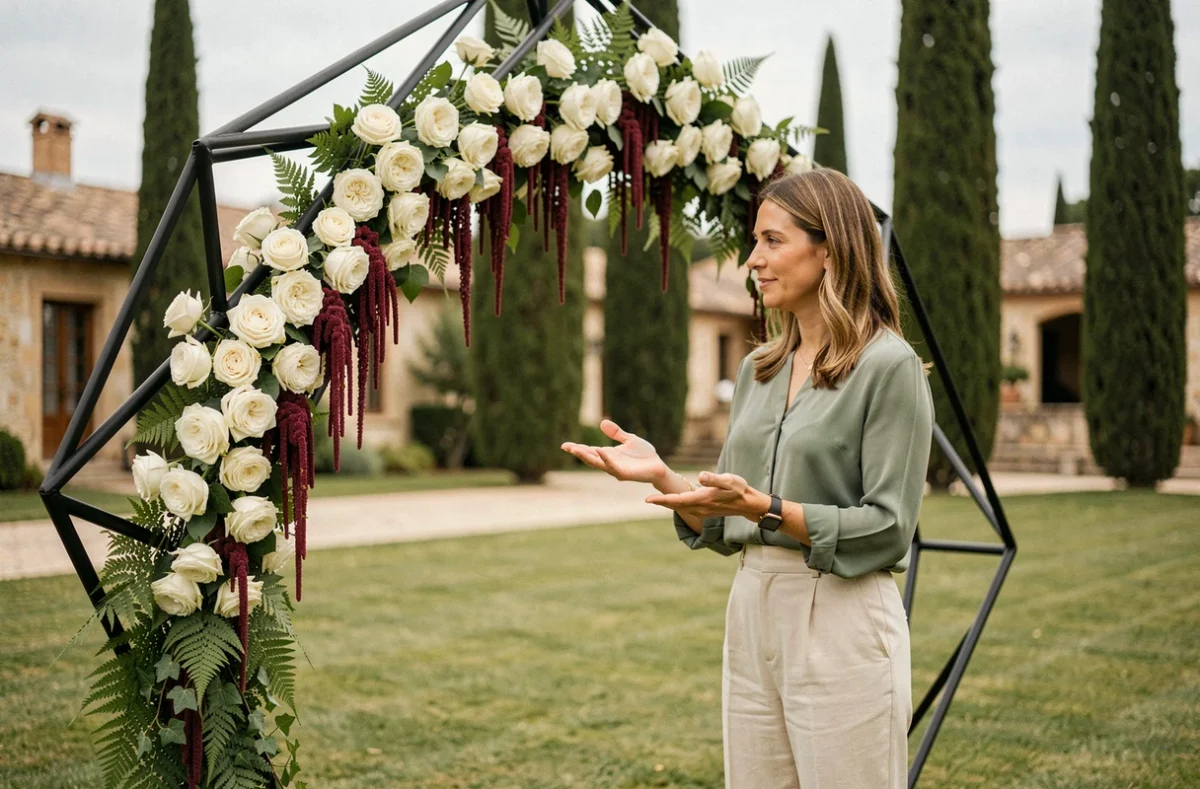
This seasonal shift has a direct impact on decoration. The plant resources available in autumn naturally guide the palette: foliage in copper tones, berries, late-season dahlias, ornamental gourds. Rather than replicating a summer ambiance with imported flowers, couples marrying in October or November can build their decor from what the season offers locally.
This approach aligns with a broader trend: thinking about decoration based on the actual calendar rather than an ideal disconnected from the context. A winter wedding does not have to resemble a June wedding adorned with candles.
Wedding Decoration and Reuse: Beyond the Ecological Gesture
The use of second-hand and reused items in wedding decoration is no longer just an environmental commitment. It is also an economic and logistical choice. A wedding planner in Essonne, quoted by Actu.fr, describes concrete practices adopted by her clients:
- Using local or potted flowers, which can be replanted after the event, instead of single-use cut arrangements
- Donating leftover cut flowers to associations or nursing homes once the reception is over
- Hunting for decor (vases, candle holders, frames, tablecloths) in flea markets or on resale platforms, then reselling it after the wedding
The fate of the decor after the celebration becomes a selection criterion for an increasing number of couples. The question is no longer just “what effect does this decoration produce?” but also “what do I do with it the next day?”. This circular logic alters decision-making: durable and resalable items are prioritized over disposable elements, even if they are spectacular.
Wedding Color Palette 2024: Between Neutral Tones and Chromatic Boldness
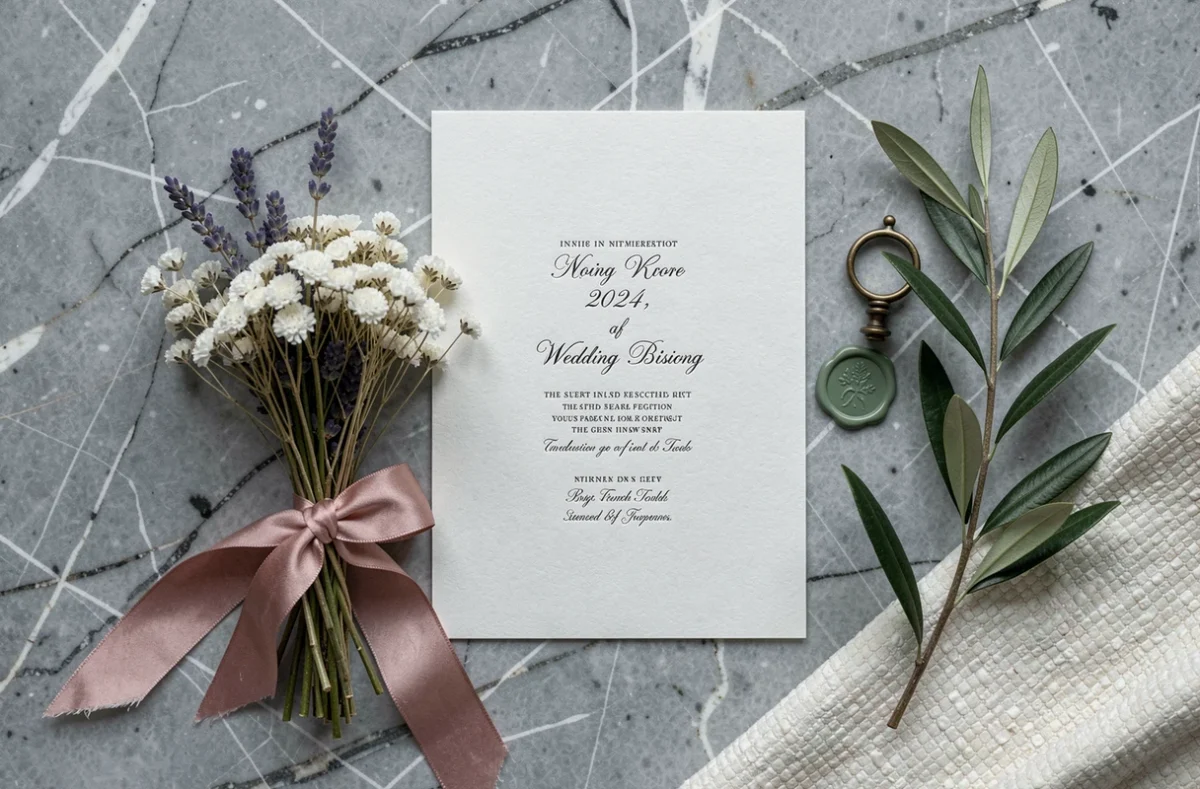
This year’s color trends unfold along two axes that coexist without contradicting each other. On one side, neutral shades maintain a strong presence: white, beige, taupe, powder pink, water green. They work in most venues and adapt to very different styles, from rustic to contemporary.
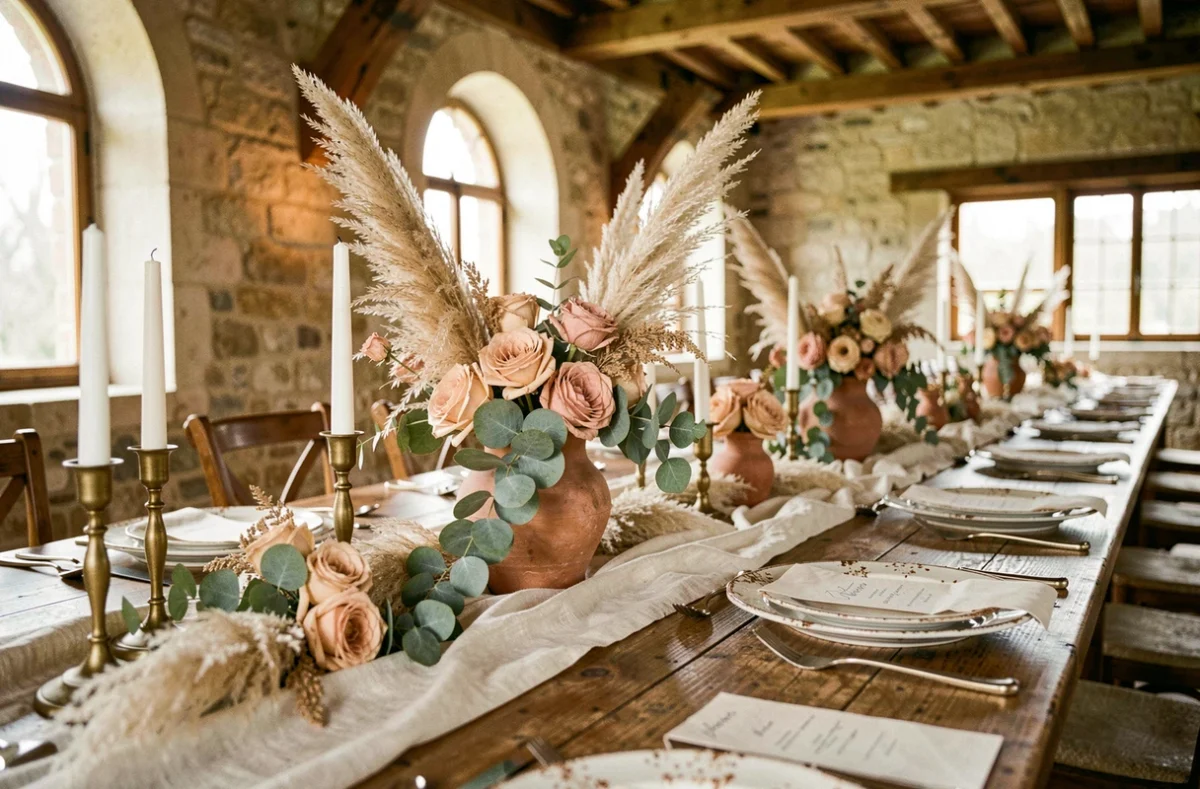
On the other side, more assertive palettes are gaining visibility. Terracotta remains present, often associated with pampas grass and raw textures. Multicolored or “rainbow” decor appears in weddings that embrace a festive and carefree aesthetic.
Coherence takes precedence over the choice of an isolated color. A successful wedding in terms of decoration relies less on the dominant shade than on how it is expressed: tableware, menu, flowers, table textiles, lighting. Couples who select a color direction too early, without having seen the venue under real conditions (natural light, wall color, existing furniture), risk visual dissonance on the big day.
Flowers and Plants: Local Sourcing as a Guiding Principle
Floral sourcing follows the same logic as the rest of the decoration. Seasonal flowers grown locally are gradually replacing standardized arrangements. For a summer wedding, peonies, garden roses, and lavender. For autumn, dahlias, amaranths, and grasses. This choice reduces the floral budget and gives the decor coherence with the surrounding landscape.
Potted or container arrangements, recoverable after the celebration, complement this trend. They serve as centerpieces during the reception, then go to the garden of the couple or their relatives.
Table Scenography and Guest Experience
The reception table concentrates a significant part of the decorative effort. In 2024, tableware elements become integral components of the scenography, no longer just functional supports. Renting mismatched tableware, tinted glasses, and artisanal stoneware or ceramic plates contribute to the ambiance as much as floral centerpieces.
The use of fresh fruits as decorative elements (citrus fruits, figs, pomegranates depending on the season) provides an alternative to exclusively floral arrangements. Edible, colorful, and inexpensive, they add volume and texture without requiring the intervention of a florist.
Table lighting remains an underutilized lever. LED candles (suitable for restrictive venues) or micro-LED garlands integrated into arrangements create a warm atmosphere as night falls, without the regulatory constraints associated with open flames.
Wedding decoration in 2024 is defined less by a dominant style than by a method: starting from the venue, the season, and the actual budget to create a coherent ambiance. Couples who incorporate these parameters from the outset achieve more personal results than those who attempt to replicate a Pinterest board disconnected from their context.