The children’s fashion market is undergoing a phase of restructuring. Seasonal collections are losing ground to pieces designed to last, while European regulations begin to govern the traceability and eco-design of textiles. In this context, clothing choices for children are becoming more thoughtful, balancing comfort requirements, environmental concerns, and style desires.
Adaptive and modular clothing: the avenue that catalogs overlook
The rapid growth of children makes a large part of their wardrobe obsolete in just a few months. Brands offering adaptive or modular clothing address this issue concretely: foldable hems, adjustable elastic sizes, reversible pieces that change looks without changing garments.
Refashion, the French eco-organization for the textile sector, recommends these products that can grow with the child or serve multiple purposes, to extend their usage life. This approach goes beyond mere style considerations: it alters purchasing frequency and reduces the volume of unused items that accumulate in closets.
Parents looking to explore collections that meet these criteria can learn more about Playakdo, a platform that brings together children’s fashion pieces with this logic of sustainability and choice.
Natural fabrics and certifications: what the European framework changes
Organic cotton, cotton gauze, and certified fabrics free from harmful substances are no longer niche arguments. They now structure the collections of most brands targeting young children. Children’s skin, being more permeable and reactive, justifies this shift towards breathable and soft materials.
The European regulatory framework supports this movement. The regulation on the sustainable eco-design of products (ESPR), effective from July 18, 2024, provides for the gradual implementation of a digital product passport for the textile sector. This system will require brands to document the composition, origin, and environmental impact of each piece.
For parents, the practical consequence is simple: labels will become more readable and reliable in the coming years. In the meantime, checking certifications (GOTS for organic cotton, Oeko-Tex for the absence of problematic substances) remains the safest reflex.
The issue of unsold children’s textiles
The ESPR also provides for the prohibition of destroying certain unsold consumer products. The exact timeline for application to children’s textiles remains to be specified, but the direction is clear: unsold new clothing stocks can no longer end up in landfills or incineration without justification.
This constraint could promote destocking circuits, private sales, and donations to associations, with an indirect effect on access to quality pieces at reduced prices.
Second-hand children’s clothing: beyond the garage sale
The resale of children’s clothing is nothing new. What is changing is the structuring of the market. Several brands now integrate take-back or exchange systems directly in-store or on their website.
Refashion describes the passing down of clothing as a practice particularly suited to childhood, where pieces are often worn for shorter periods due to growth. Beyond simple resale, the organization also mentions rental, exchange, repair, and customization as avenues to extend the use of a garment.
- Renting formal wear (baptism, wedding, parties) avoids the purchase of a piece worn only once, often costly and quickly outgrown.
- Customization (name embroidery, adding patches, dyeing) transforms an inherited garment into a unique piece, which also serves as an original gift idea.
- Parent swapping platforms allow for exchanging lots by size, without financial transactions.
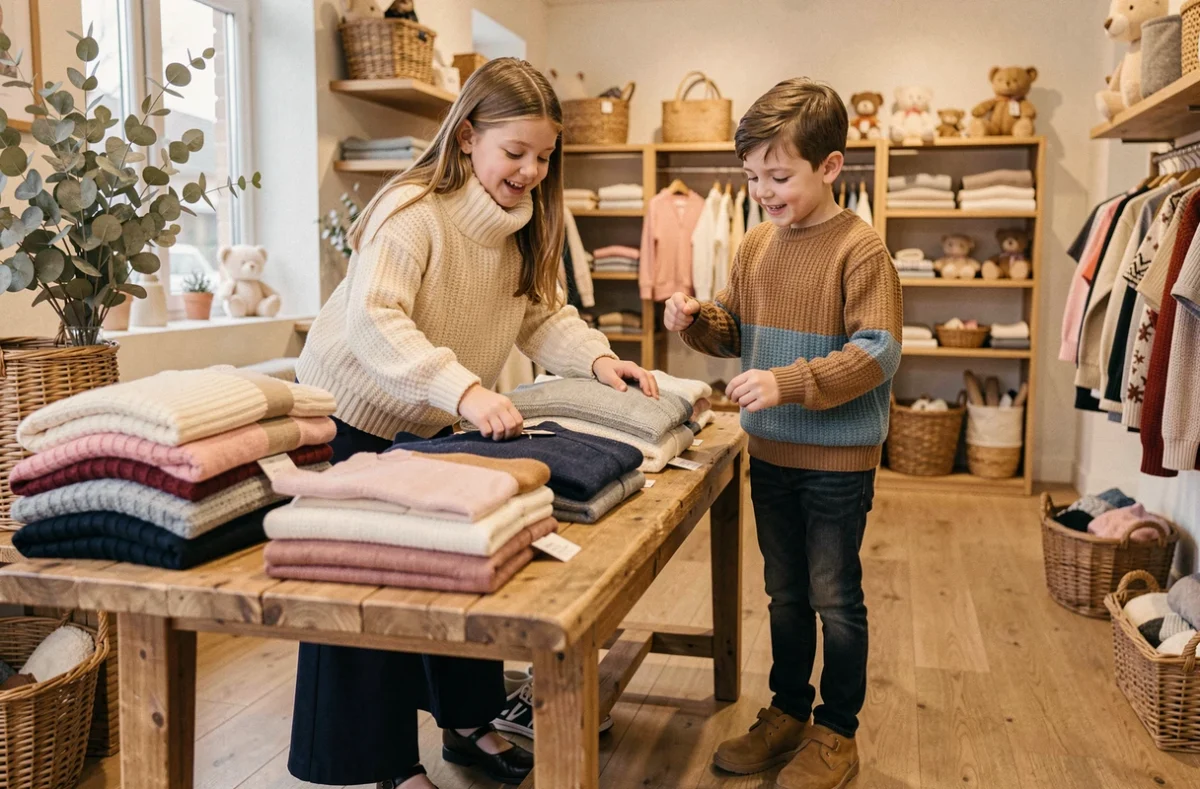
Children’s fashion gift ideas: focus on durable pieces rather than disposable lots
“First age” clothing gift sets remain a classic on baby registries. Their limitation is well-known: sizes are often the same (0-3 months), and the baby receives five identical bodysuits from five different people.
For a standout fashion gift, several avenues deserve exploration:
- A piece in size 12 or 18 months instead of newborn size, to be genuinely worn when parents need it.
- A quality accessory (merino wool hat, soft leather booties) that lasts through the seasons without losing shape.
- A gift card from a children’s fashion brand, allowing parents to choose the size, color, and style at the right time.
- A customizable garment (embroidered name, color choice), straddling the line between a sentimental gift and a useful clothing item.
The idea is not to spend more, but to spend better. A single well-chosen piece makes a greater impact than a lot of five basics forgotten at the back of a drawer.
The trap of licensed characters
Clothing featuring cartoon characters appeals to children, but their emotional lifespan is short. A child’s favorite hero at three will be replaced six months later. For a gift, opting for a graphic print (stripes, polka dots, geometric patterns) ensures longer use and easier resale in the second-hand market.
The children’s fashion market is refocusing on tangible criteria: material durability, cut modularity, production traceability. Trends may come and go, but a well-designed garment remains in the wardrobe long after the season ends.