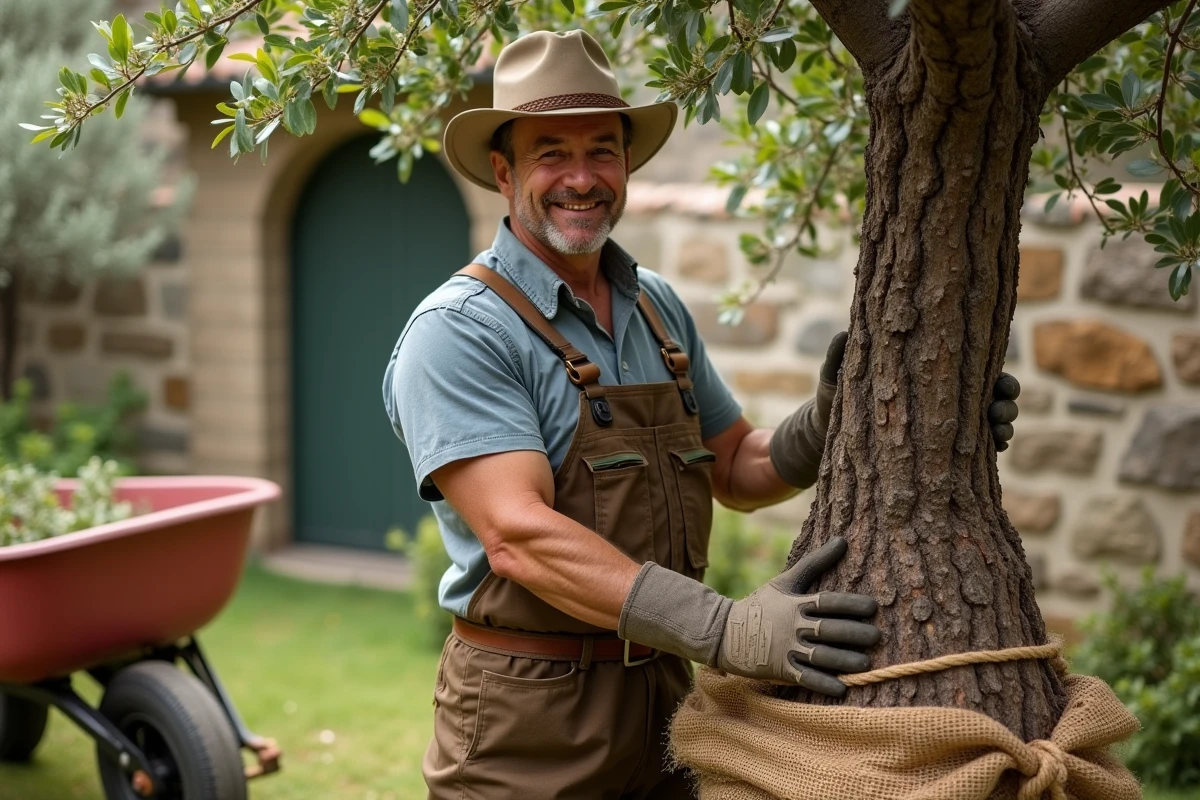
Moving an adult olive tree is not just about changing a piece of decor. It exposes the tree to a real test, capable of jeopardizing its survival, even in a soil known to be welcoming. The numbers are relentless: for trees over fifty years old, a hasty transplantation results in a failure rate exceeding 40%. Cut roots, water stress, compromised recovery… the cost of insufficient preparation is paid in full.
Moving a centenary olive tree: the stakes and precautions to know
Uprooting and replanting an adult olive tree, especially one that is a century old, is never taken lightly. This tree embodies a part of heritage, both in terms of landscape and biology. To maximize the chances of success, it is better to intervene during the dormant period, generally from November to February in our latitudes. At this time, the sap flows slowly, limiting the stress related to soil change and handling.
From the very first preparations, rigor is essential. It is necessary to define the future root ball at a distance corresponding to three times the trunk diameter. This anticipation, to be carried out several months in advance, stimulates the growth of new roots within the area that will be moved. When the time comes to cut the main roots, each section must be protected to avoid any drying out.
Transport also requires its share of precautions. A transplanted olive tree goes through a phase of hydraulic imbalance. To limit this shock, the root ball must be covered, abrupt movements should be avoided, the trunk stabilized, and appropriate logistics planned, including the tree’s volume, soil type, and access for lifting equipment… nothing should be left to chance.
After replanting, watering must be managed carefully. Too much or too little water will affect the tree’s recovery. If you are curious about the timing, the site Cultivons nos Racines offers a detailed article on the subject: “ moving and replanting an adult olive tree.” At every stage, from preparation to post-replanting monitoring, it is the sum of attentions that ensures success.
What steps to follow for successful transplantation of an adult olive tree?
Transplanting an adult olive tree is not improvised: patience, method, and precision are essential for the tree to anchor itself sustainably in its new soil. Here are the main steps to follow to maximize your chances of success.
Preparing the planting hole
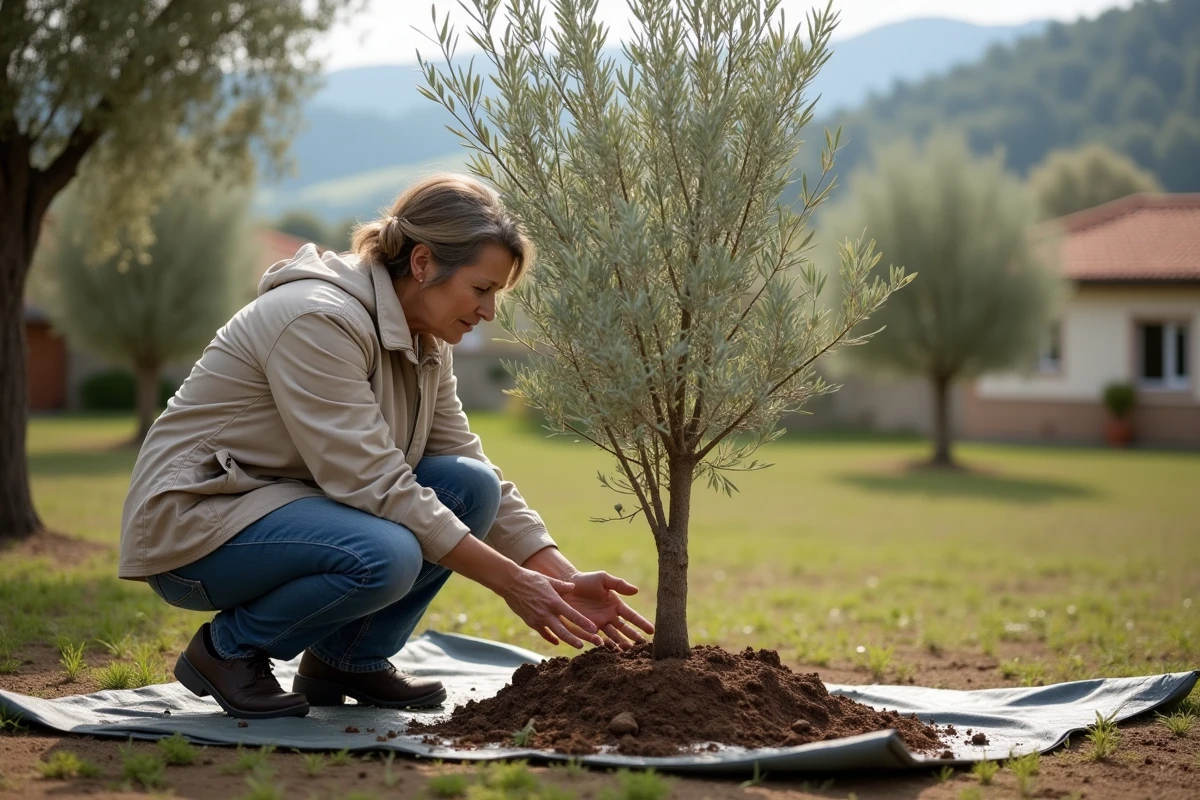
The welcome hole must meet the stakes: it should be wide and deep enough for the root ball and root system to settle without constraint. Ideally, the hole should measure between one and a half to two times the width of the root ball. This well-loosened volume of soil will provide the olive tree with what it needs to thrive. On the other hand, avoid excessively compact or waterlogged soils, which are unfavorable for recovery.
Extraction and handling of the root ball
The extraction must be done with care. It is important to preserve as many fine roots as possible and to keep the soil well attached around the roots. This connection between soil and roots is the key to rapid recovery. Handle the olive tree without jolts, keeping the trunk perfectly stable.
Before replacing the tree, certain actions are essential:
- Prepare the hole with enriched soil, for example, by adding well-matured compost or a bit of sand if the soil is heavy.
- Place the olive tree vertically, ensuring that the root collar is level with the ground.
- Gradually backfill, lightly compacting to avoid air pockets but without overly compressing the soil.
The initial watering should be adapted to the weather and season. The goal is to moisten the root ball just enough, without creating excess stagnant water. During the first months, keep an eye on the recovery and watch for the appearance of new shoots: this is a sign that the tree is settling in.
Post-replanting care: maximizing the recovery and vitality of your tree
After transplantation, everything hinges on the consistency of care. Watering must be meticulous: neither too abundant nor too sparse. Well-drained soil remains the best guarantee against stagnant moisture, the enemy of the olive tree. During the first weeks, aim for fresh soil around the roots, but avoid any saturation.
Also consider mulching: a few centimeters of chips, dead leaves, or straw at the base of the trunk are enough to limit evaporation and protect the shallow roots. This simple action also helps to slow the growth of unwanted weeds while stabilizing soil temperature.
When it comes to fertilization, restraint is necessary. Wait for the tree to show new signs of growth before adding fertilizer; then choose a low-nitrogen formula that is rich in potassium and phosphorus to encourage root development. The needs of a recently moved olive tree are not the same as those of a productive tree that has been established for years.
Finally, remain attentive to the appearance of the trunk, branches, and foliage. A light pruning of damaged shoots may be useful if signs of weakness appear. The success of transplantation depends on patient support and constant adaptation to the tree’s reactions in its new environment. This discreet yet vigilant companionship makes all the difference.
Replanting an adult olive tree is betting on resilience: the tree, if it recovers, will bear the marks of this challenge for a long time, a living witness to the boldness and care that have been dedicated to it.