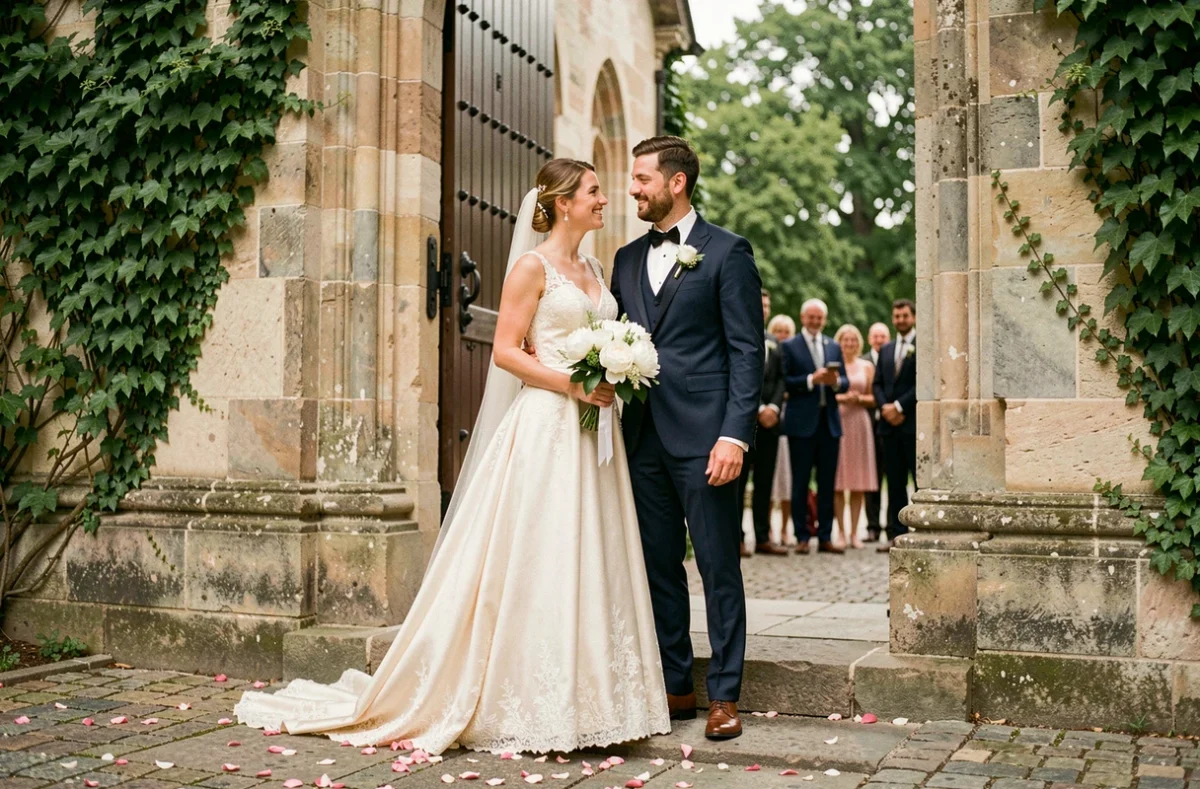
An outdoor wedding with a non-religious ceremony scheduled for 4 p.m.—and at 3:30, the wind picks up. Chairs start moving, petals blow away, and the bride’s hairstylist has to improvise. It’s a scenario that comes up every season. Planning an elegant wedding is about more than choosing a beautiful color palette: it means anticipating what could go wrong so every guest remembers a smooth, comfortable and thoughtfully planned day.
Wedding reception backup plan: prepare for more than rain
Most couples think about a marquee in case of rain. Wind, heatwaves and thunderstorms often remain blind spots. A comprehensive backup plan covers three distinct parts of the day: the ceremony, cocktail hour and dinner. Each requires a different space, and capacity can vary by as much as a factor of two between the outdoor setup and the indoor alternative.
Visiting the backup space in advance is a step that’s too often overlooked. Check the actual capacity for each setup, identify access for the caterer, and make sure the sound system works indoors too. Agree in advance on who will decide to move things indoors and when to avoid hesitation on the big day, when stress makes every minute count.
In hot weather, water stations, fans and a shaded area may be enough to keep guests comfortable without moving the entire reception. In this case, elegance is measured by how much thought you give to your guests, not by how perfect the décor looks.
You can find practical inspiration for every stage of the planning process on La mariée de Sophie’s wedding website, which covers the choices to make, from the venue to the reception.
Wedding venues and administrative requirements: what to sort out first
Before falling in love with a venue, check a regulatory detail that’s often overlooked. In France, a civil wedding must take place in the municipality where one of the future spouses or one of their parents lives or resides. The banns are posted for ten days, and the ceremony cannot take place before the tenth day after they are published.
This waiting period directly affects the schedule. If the reception is far from the town hall, factor travel time into the itinerary and arrange a vehicle or transfer so guests don’t get lost between the two locations. Nothing is less elegant than a wedding procession scattered across three country roads.
Birth certificates: a scheduling pitfall
If the town hall cannot access civil records directly, it will ask for a recent birth certificate. Here’s the detail that makes all the difference: the validity period is assessed on the date the application is submitted, not the wedding date. When planning a year ahead, this may mean having to obtain a new certificate if you submit the paperwork too early. It’s best to request the documents three to four months before you plan to submit your application.
Elegant wedding décor: cohesion over excess
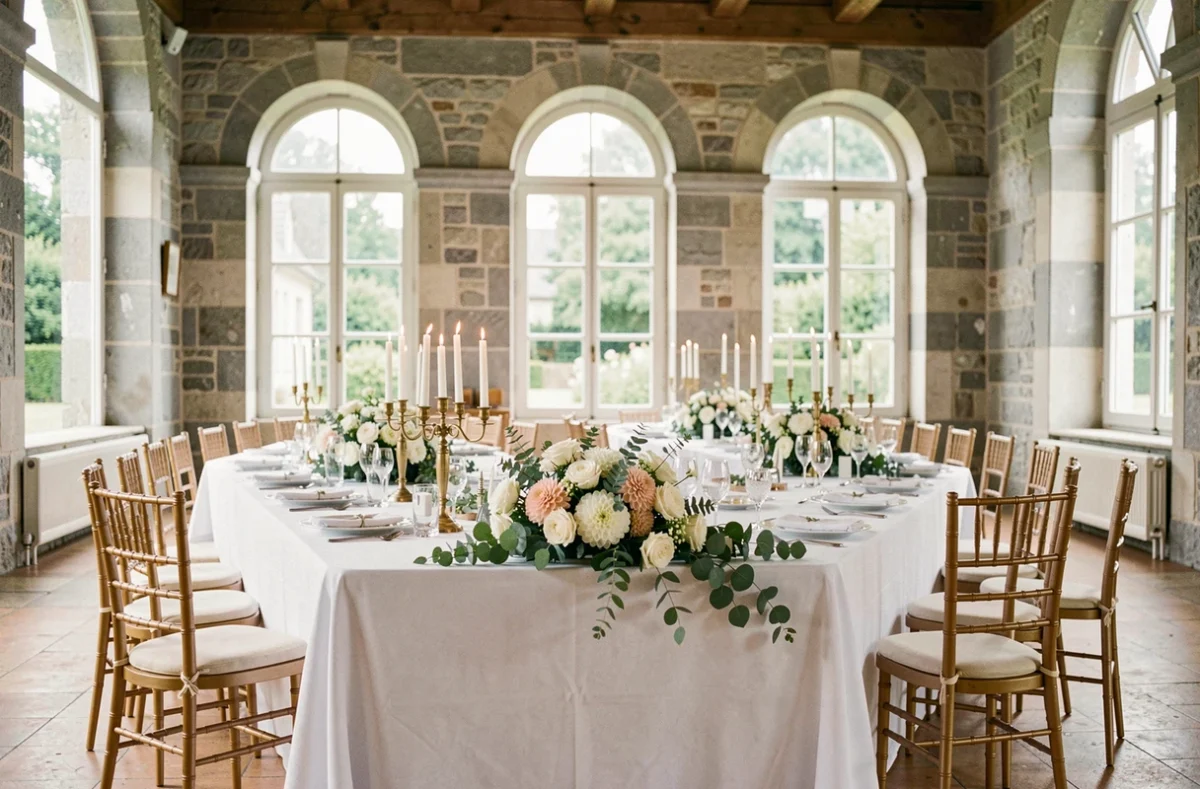
You can tell a chic wedding not by the volume of flowers on the table, but by how well all the elements work together. Choose a unifying theme—material, color or era—and carry it through everything: stationery, centerpieces, signage and menus. Three guidelines will help you stay on track:
- Limit your palette to two or three colors, using different shades rather than strong contrasts to avoid a trend-catalog look.
- Choose complementary materials for the tablecloth, napkins and decorative elements: linen, heavyweight cotton or textured paper work better together than a mix of satin, burlap and gold plastic.
- Leave space on the table so guests can set down their glasses, help themselves to bread and chat without having to work around a monumental vase.
Elegance comes from what you take away, not what you add. If a decorative element contributes neither to comfort nor to the atmosphere, remove it. Guests are more likely to notice a spacious, well-lit table than an overload of coordinated accessories.

Wedding receptions and guest comfort: the true mark of a memorable wedding
You can invest in a spectacular venue and refined décor, then lose all sense of elegance because guests have to wait twenty minutes at the bar, the restrooms are a hundred meters away, or dinner drags on until midnight with no one knowing what’s next on the schedule.
The evening schedule and pace
A smooth schedule is built around short transitions. Aim for no more than fifteen to twenty minutes between the ceremony and cocktail hour. Let guests know what’s planned, either with a sign at the entrance or through a master of ceremonies who announces each part of the evening. A well-informed guest is a relaxed guest, and that’s what makes an evening enjoyable.
Food waste and sorting: a question to ask your caterer
Since January 1, 2024, source separation of food waste has also applied to small producers. For a wedding reception, this raises a practical question to ask the caterer and venue manager: what happens to food-preparation waste and leftovers, and who is responsible for sorting them? A caterer who has already incorporated this requirement into their operations works more efficiently, and it shows in how the evening is managed overall.
Wedding budget: where to focus your spending
The budget varies depending on the number of guests, the venue and the season. Rather than spreading your spending evenly across every category, focus on what guests experience directly:
- The quality of the food and drinks, which is often what guests remember most.
- The music and sound, which shape the energy of the evening far more than the décor.
- Logistical comfort—parking, shuttles and signage—which prevents frustration and downtime.
An elegant wedding isn’t an expensive wedding; it’s one where nothing gets in the way. Guests quickly forget the color of the napkins, but they remember a cold meal or an interminable wait between key moments for a long time.
The final detail that sets a thoughtfully planned reception apart is how the evening ends. Offer a late-night snack, a hot drink and soft lighting rather than abruptly cutting off the music at the agreed time. Guests who feel welcome right to the end are the ones who will talk about it for years to come.