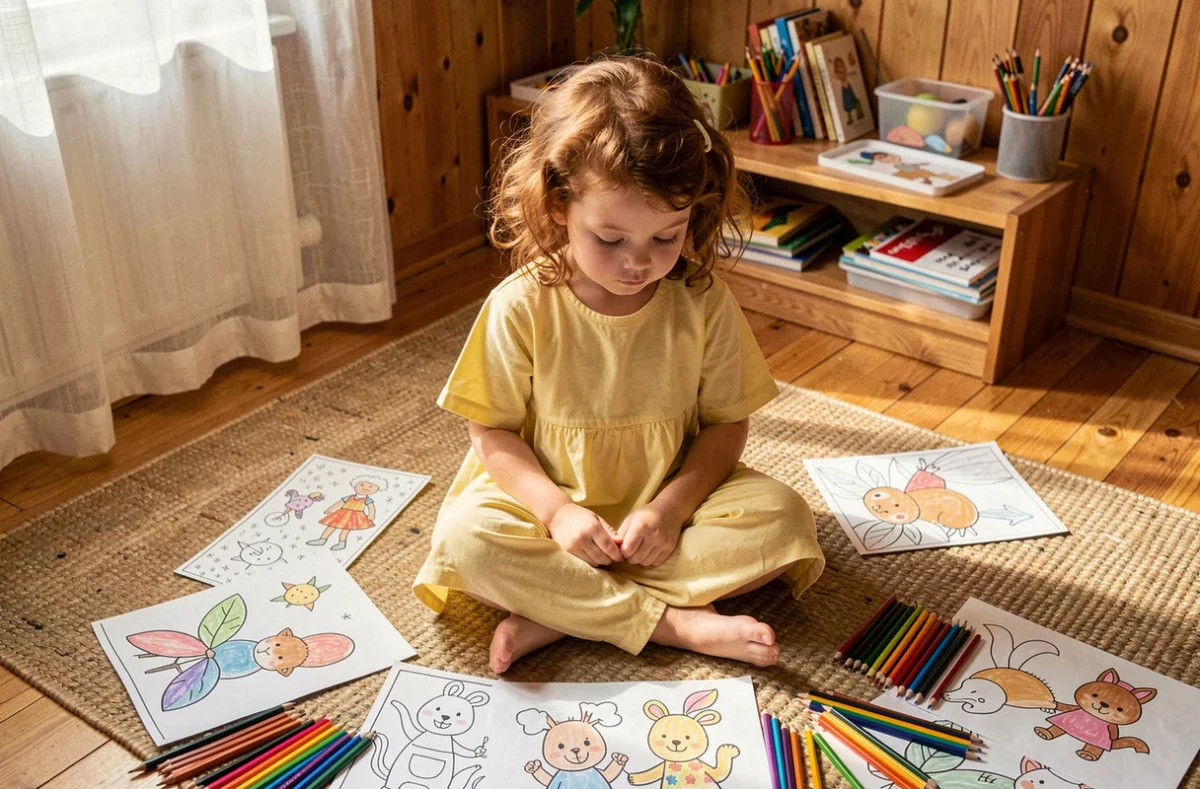
A child coloring is doing more than simply filling in an area outlined in black. They choose a color, adjust the pressure of their hand, and decide whether or not to stay within the lines. Each movement engages hand-eye coordination, and every color choice reflects a mood or a preference.
Free printable coloring pages provide easy access to this activity, with no screen time or expensive supplies required. For children aged 2 to 4, this screen-free activity aligns with the WHO recommendations published on April 24, 2019, which advise limiting sedentary screen time to less than one hour a day for this age group.
Coloring pages for children with motor or visual difficulties
Have you ever watched a child grip a pencil so tightly that the lead breaks after just three strokes? Difficulties with grasping, vision, or concentration affect far more children than you might think. Reducing coloring to an exercise in “staying inside the lines” excludes children who could benefit greatly from the activity.
A few simple adjustments can make all the difference. Thick, high-contrast outlines help children with low vision identify the different areas. Drawings with large shapes and no tiny details let children with developing fine motor skills color without getting frustrated.
For children who struggle to stay focused, coloring pages with just a few elements work better than busy scenes. One animal, one object: the child finishes the picture, enjoys a sense of accomplishment, and can start another if they like. Platforms such as https://www.dididou.fr offer coloring pages organized by theme, making it easier to choose a design suited to the child’s ability.
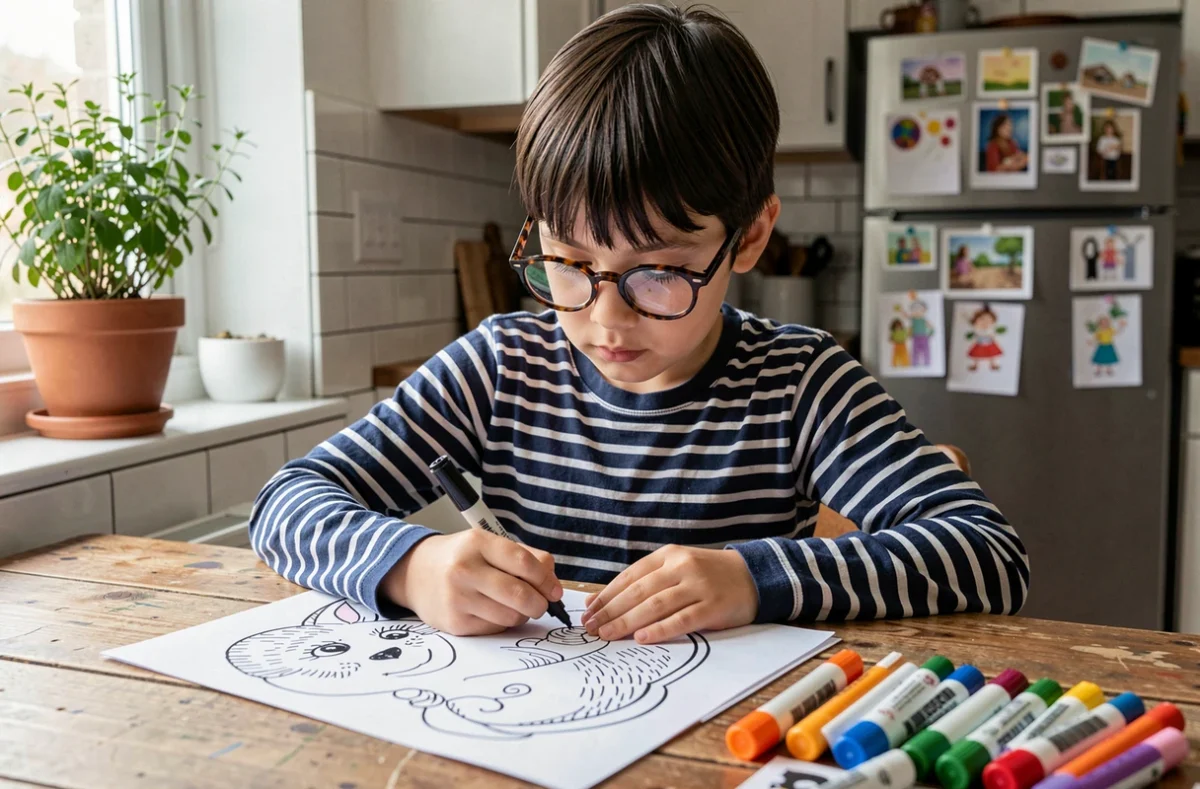
The materials matter just as much as the picture itself. A triangular pencil or foam grip reduces hand fatigue. Broad-tip markers require less precision than fine colored pencils. For a child who is still learning to hold a pencil, finger painting on a large-format printed coloring page is a creative alternative in its own right.
Free creative activities beyond coloring
Coloring is a starting point, not an end in itself. Once a page has been printed and colored, it can become the basis for other hands-on activities that extend creative time.
- Cut out the colored shapes to create a collage or a three-dimensional scene on cardstock, adding a tactile element to the project
- Use the finished coloring page as a template for a craft project: glue pieces of paper, fabric, or yarn onto the colored areas
- Turn an animal coloring page into a puppet by gluing it onto a craft stick, then make up a story about the character
- Pair coloring with a sorting game: color farm animals green and wild animals orange, for example
These follow-up activities turn something that may seem passive into an active project. The child goes from coloring to creating, without needing any specialized supplies.
Choosing the right coloring page for a child’s age and interests
A dinosaur coloring page is unlikely to appeal to a child who loves unicorns. This may seem obvious, but it is often overlooked: we print whatever is at hand without asking whether the picture matches what the child wants to explore.
Letting children choose their coloring page boosts their engagement. As they browse a gallery of drawings organized by theme (animals, holidays, characters, vehicles), they are already practicing decision-making. Having a say from the start makes them more invested in the activity than if the picture is chosen for them.
For younger children (ages 2–3), simple geometric shapes and familiar animals work well. The outlines should be clear, and the spaces to fill in should be large enough for still-unsteady hands.
Between ages 4 and 6, scenes with several elements (a landscape, a party, an underwater world) start to capture children’s interest. They may also enjoy color-by-number pages, where each number corresponds to a color. This type of coloring introduces following instructions while keeping things fun.
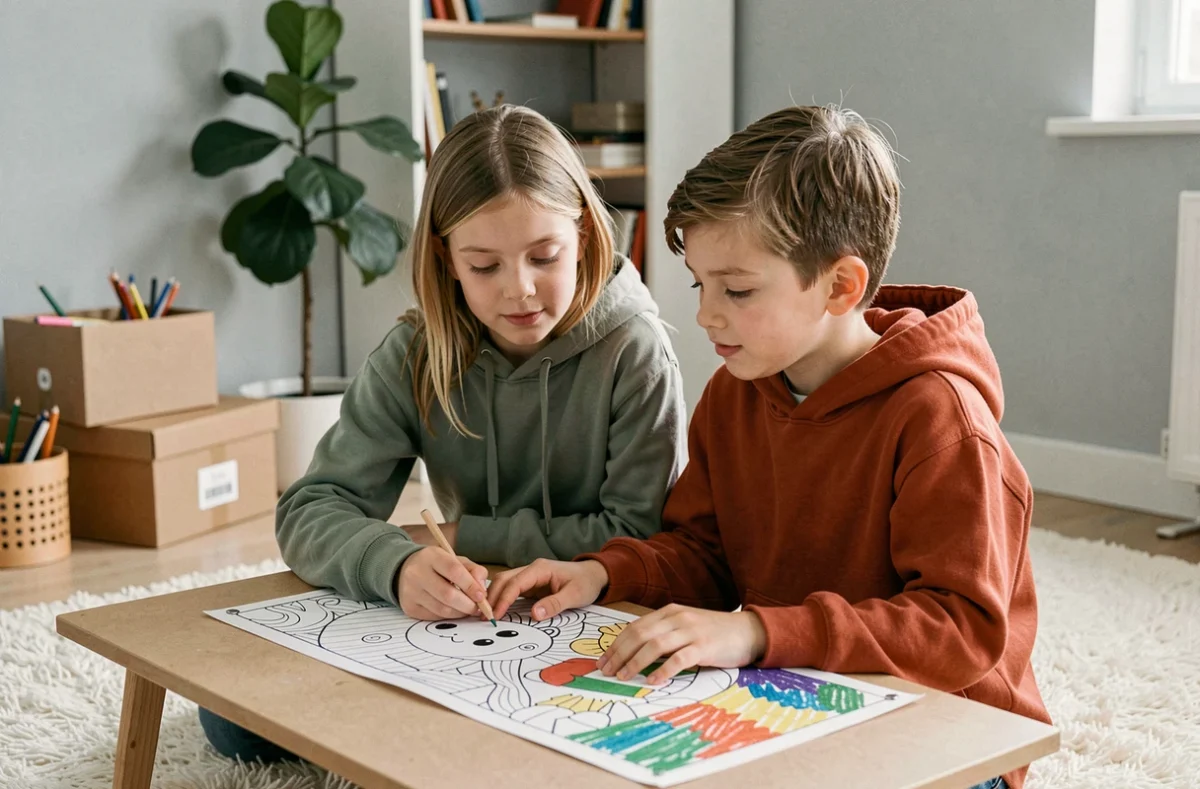
After age 6, mandalas, repeating patterns, and more detailed drawings take center stage. Complex coloring pages aren’t just for adults: many children this age find them calming and absorbing.
Observed effects of drawing and coloring on anxiety in children
A 2026 meta-analysis published in BMJ Paediatrics Open examined 10 randomized trials involving children aged 5 to 12. The findings show that drawing and visual arts activities may help reduce anxiety in the short term, particularly around medical procedures.
Results varied from one study to another. This means that occasional coloring at home will not necessarily have the same effect as a supervised session in a hospital setting. The value of these findings lies elsewhere: they confirm that coloring engages a child’s attention and can distract them from a source of stress.
However, presenting coloring as a fine motor skills training program would be an overstatement. There is no strong evidence to support the claim that regular coloring alone improves motor precision. Coloring remains an enjoyable activity that engages the hand and eye, not a rehabilitation program.
What coloring reliably offers is a quiet, structured activity guided by a visual framework, where children can work at their own pace. For parents looking for an alternative to screens or an easy activity to enjoy together, a printed page and a few pencils are all it takes. Creativity isn’t measured by the ability to stay inside the lines, but by the desire to pick up a pencil and get started.