Brittany does not do things by halves: over 800 sites classified or listed as Historical Monuments, a profusion that propels the region among the densest in heritage in France. The festoù-noz, recognized by UNESCO since 2012, continue to gather thousands of enthusiasts each year, bridging ages and backgrounds. In 2023, no less than 400 cultural festivals punctuated local life, featuring music, street arts, and large-scale reenactments. Behind this effervescence, a network of associations and artisans works to pass on gestures, stories, and a collective memory that continually nourishes Breton identity.
What makes the Breton soul: between heritage, language, and legends
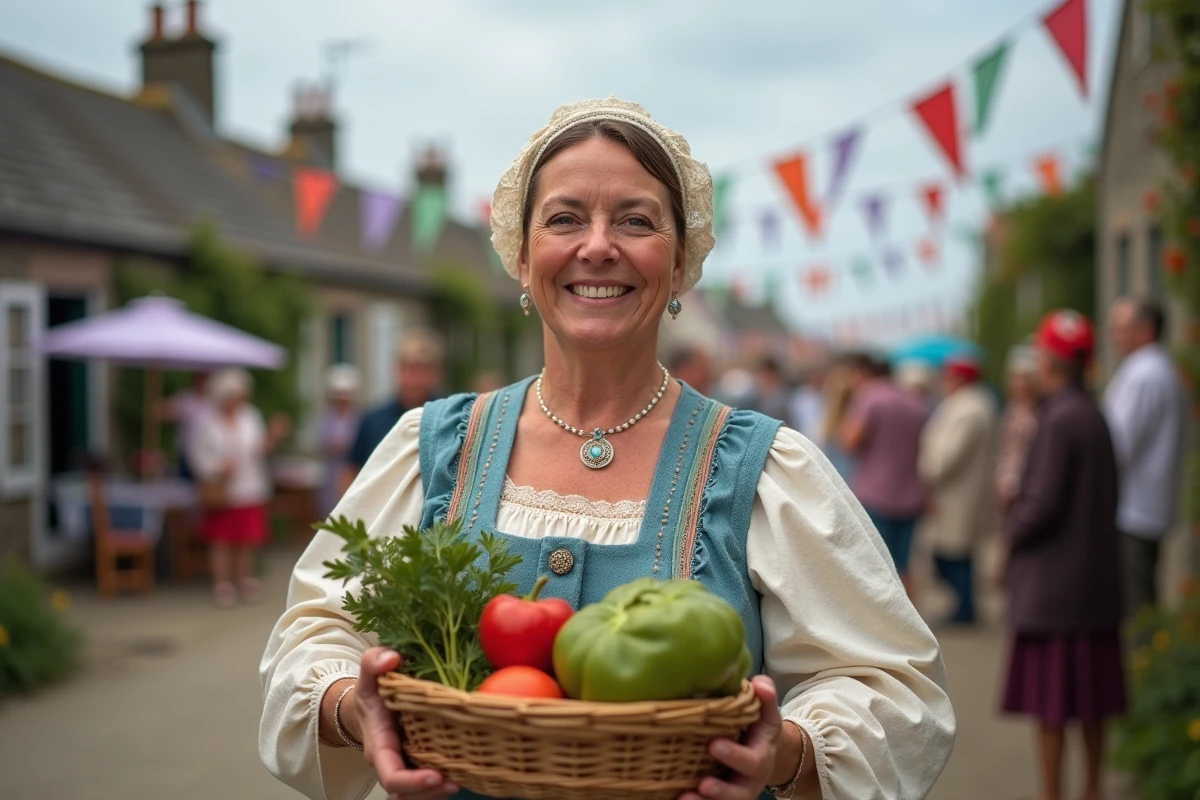
To evolve at the heart of Breton culture is to enter a universe forged by centuries, shaped by challenges, circumvented prohibitions, collective dances, and fiercely celebrated festivals. Here, the Breton language and Gallo resonate in the alleys and even in the squares, carried by entire generations. From traditional songs to tales shared by the fireside, each story keeps the memory of a land of tenacity and invention. The traditional Breton costumes, with their precise embroidery and marked colors, illustrate this diversity. A common thread among these garments, the traditional dances weave, from circle to circle, a true collective spirit. The traditional Breton festivals mark the seasons: one finds the biniou, the bombarde, a whole music that leaves no one behind. The legends still inhabit the forests, moors, and shores: mischievous korrigans, Morgane the enchantress, or the Ankou with his scythe, figures that remind everyone of the ancientness of an entire heritage. This vitality has not escaped the artists of Pont-Aven, who still draw from the intensity of the landscapes to renew their art. The learning of know-how, the involvement in associative life, and the protection of intangible heritage form a set of rare richness, where every gesture and every story contribute to keeping Breton culture very much alive. For those who want to go further, obtain a calendar of festivals, delve deeper into the question of language, or discover new avenues for local exploration, the essentials are just a few clicks away: information on culture-bretagne.org.
Which villages and heritage sites best reveal authentic Brittany?
The soul of Brittany needs anchoring. It reveals itself at the turn of its villages, in the quiet strength of its heritage sites, and in the unique character of its ports. In Cornouaille, Quimper charms with its half-timbered houses dating back to the Middle Ages, its cobbled streets, and the brilliance of its cathedral. Further afield, the walled town of Concarneau embodies the balance between citadel and everyday port life. The northern part of the region offers an adventure for walkers: Saint-Malo, proud of its ramparts, cultivates its stories of privateers. Mont Saint-Michel, this arch rising above the bay of Mont Saint-Michel, blurs the boundaries and stands as a spiritual landmark for travelers. In Ille-et-Vilaine, castles, abbeys, and manors testify to a history deeply rooted between land and sea. On the southern coast, the Gulf of Morbihan aligns mysterious islets and ever-renewed horizons. The rugged lands of the Crozon Peninsula offer vibrant cliffs, moors, and beaches exposed to all winds: a Brittany proud of its harshness. As for the lighthouses of Brittany, they rise along the coastline, stone and light beacons, symbols of solidarity among sailors. These magical places in Brittany each reveal, in their own way, a vibrant Breton cultural heritage, never static.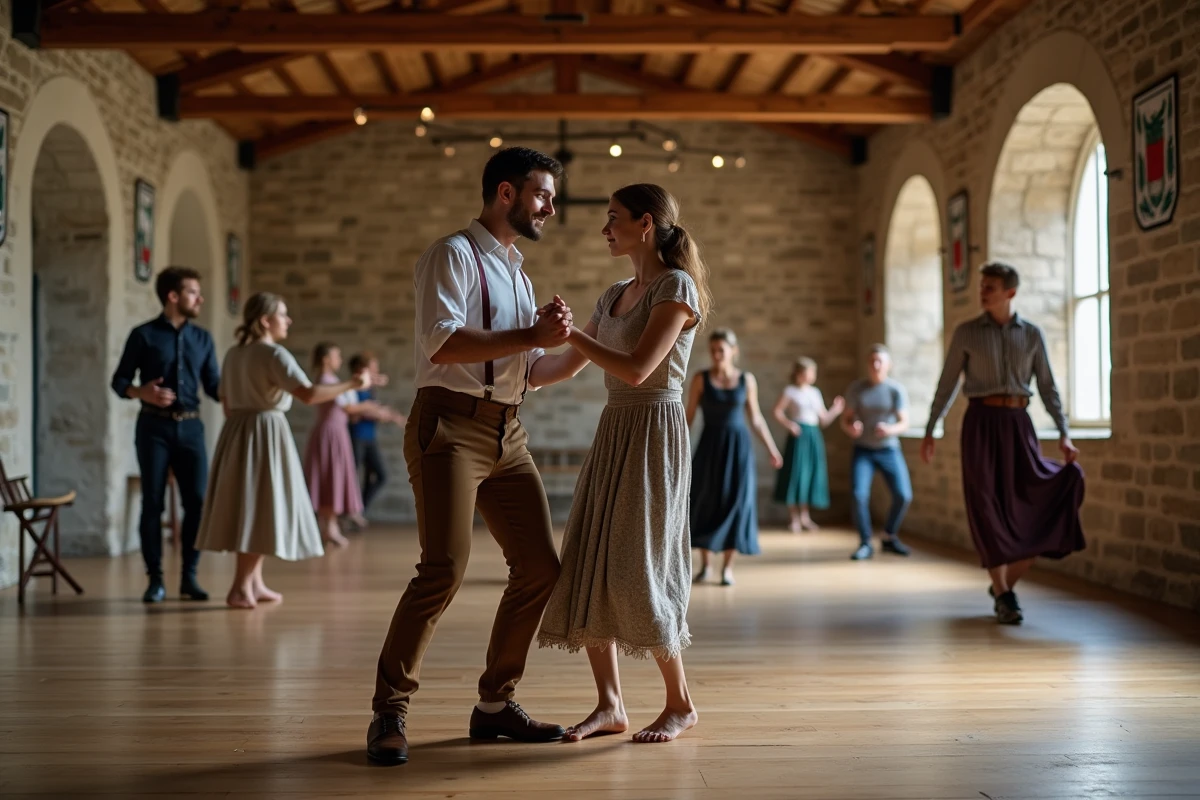
Fest-noz, maritime festivals, and major events: feel the rhythm of Breton cultural events
The experience of a fest-noz rarely leaves one indifferent. You find yourself swept away by traditional Breton music, mingling with the crowd, sharing a dance, a refrain, a collective emotion. Each village preserves its traditional Breton festivals in its own way: musicians, bagadoù, young and old gathered around transmission and celebration. In summer, the Cornouaille Quimper festival brings together artists, musicians, and enthusiasts in an atmosphere where heritage rhymes with creation. In Lorient, the interceltic festival celebrates the ties between Celtic nations, fostering a unique brotherhood through music and dance. On the quays of Brest, during major years, the maritime festivals attract a fleet of tall ships from around the world, greeted by the crowd. In Saint-Malo, the Route du Rhum literally electrifies the city at each edition: sailors, spectators, and families experience the departure as an event in its own right. The Trans Musicales of Rennes illustrate a Brittany rooted in the present, attuned to the sounds of the world and novelty.
Among the major events that shape local cultural life, here are some notable examples:
- Fest-noz: dance, song, conviviality
- Cornouaille Quimper Festival: heritage and creation
- Lorient Interceltic Festival: Celtic brotherhood
- Brest Maritime Festivals: memory and modernity
- Route du Rhum in Saint-Malo: challenge and emotion
- Trans Musicales Rennes: innovation and openness
Through these events, Brittany claims a collective energy, where the past nourishes the future and where tradition paves the way for the unexpected. Crossing the threshold of a Breton festival is to risk seeing the territory in a whole new light, or to return one day to leave your mark in turn.