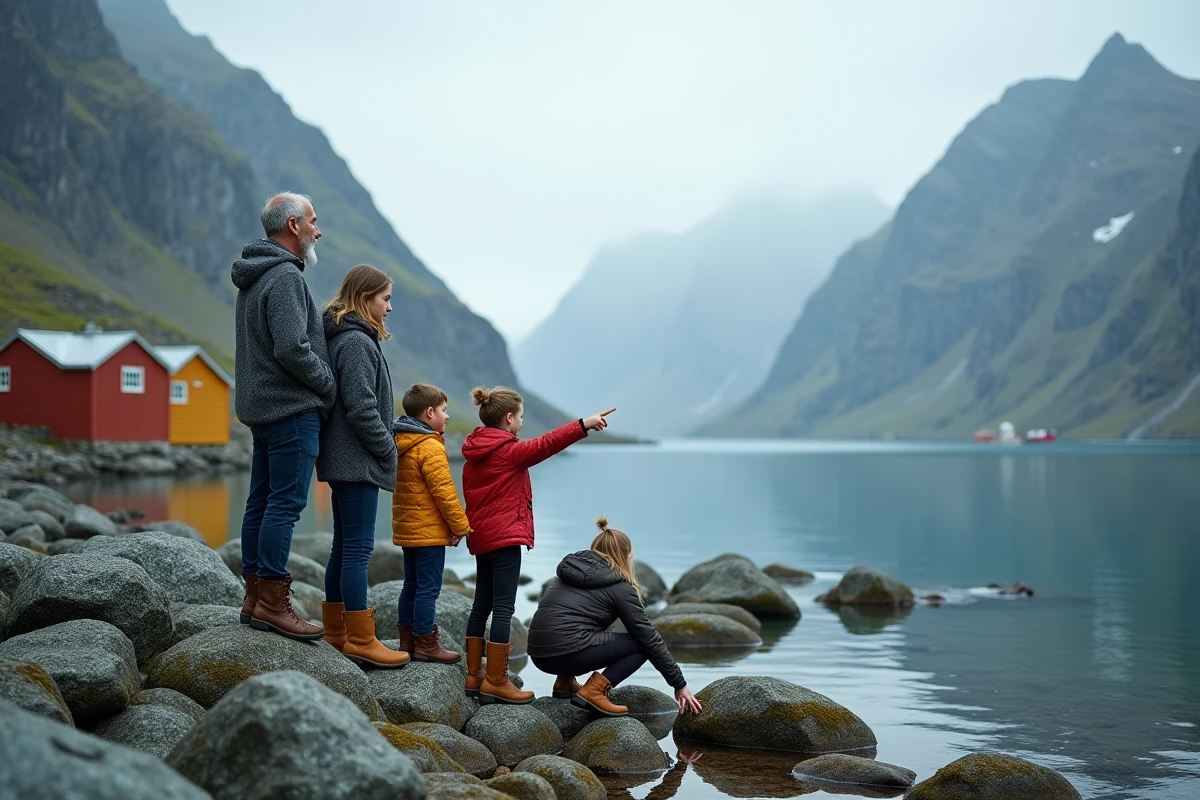
The Lofoten Islands, an archipelago located north of the Arctic Circle in Norway, attract families every summer seeking spectacular landscapes and continuous light. Traveling with family to the Lofoten requires specific preparation: the summer overcrowding at certain sites, new local restrictions on wild camping, and the choice of child-friendly accommodations change the game compared to usual travel narratives.
Local Restrictions and Overcrowding: What Changes for Families in Lofoten
Since the post-Covid recovery, summer visitation to the Lofoten has significantly increased. The municipal council of Vågan (which covers Svolvær and Henningsvær) adopted a tourism management plan in 2023, the “Vågan Reiselivsstrategi 2030,” to reduce pressure on parking, sanitation, and waste management.
Specifically, the most accessible spots for families are the first to be affected. The beaches of Haukland and Uttakleiv, often recommended for families, see their parking lots filled to capacity during peak season, sometimes as early as midday. The parking lot at Reinebringen, the starting point for a popular hike, faces the same issue.
Several municipalities (Moskenes, Flakstad) have also tightened restrictions on wild camping and overnight parking in camper vans since 2021. “No overnight parking” zones are marked at hiking trailheads, and fines are possible in the summer.
For families considering a road trip in a van or car with a tent, checking local parking rules before each stop avoids unpleasant surprises. It’s better to book equipped campgrounds or solid accommodations, which offer showers, kitchens, and laundry facilities, much more convenient with children.
To explore child-friendly options on this archipelago, family articles on E-Nomad detail several tested accommodation options and itineraries.
Rorbuer and Alternatives: Choosing Child-Friendly Accommodation in Lofoten
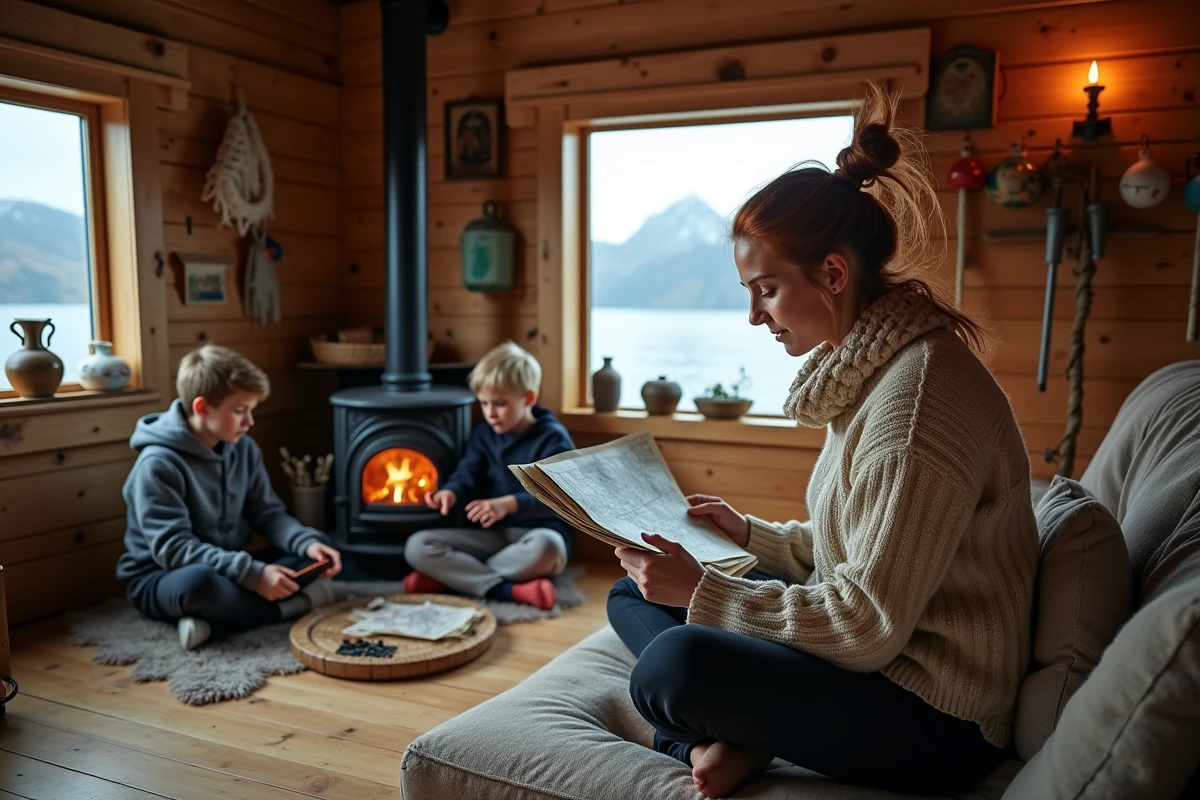
The rorbuer (converted fisherman’s cabin) remains the most iconic type of accommodation in Lofoten. It is also one of the most practical for a family: equipped kitchen, living space, and sometimes multiple bedrooms. They can be found in Reine, Svolvær, Henningsvær, or Kabelvåg, often by the sea with views of the mountains.
Why choose this over a classic hotel? A rorbuer allows for meal preparation, which limits expenses in a country where dining out is expensive. With young children, eating at the accommodation also simplifies the days. Most rorbuer provide bedding and basic amenities, but it’s best to confirm the availability of a crib or high chair when booking.
Here are a few points to check before booking:
- The proximity of a village with a grocery store or supermarket, as distances between towns can be long on the E10 road.
- The accessibility of the rorbuer by car, especially with luggage and child equipment.
- Availability in high season: the best-located rorbuer (Reine, Hamnøy) are booked several months in advance.
For families who prefer a more classic setting, hotels exist in Svolvær and Leknes. They offer standard comfort but less autonomy than a rorbuer. The balance between autonomy, location, and price influences the choice more than the standard.
Family Activities in Lofoten: Focus on Variety Rather Than Performance
The most common mistake with children in Lofoten is planning hikes that are too long or too challenging. The archipelago offers many other accessible activities.
Child-Friendly Hiking
Several short trails offer remarkable views without excessive elevation gain. Walks around Kabelvåg or along the coastline between villages are doable with children as young as five or six. Favoring coastal trails over steep ascents reduces the risk of fatigue and frustration.
Reinebringen, often mentioned, features a steep and long constructed staircase: not suitable for young children. Families who are determined to go should plan to carry the smallest ones and start early in the morning, before the crowds.
Beaches and Water Activities
The white sand beaches (Haukland, Ramberg, Kvalvika) surprise with their beauty. The water remains cold year-round, but children enjoy playing with their feet in the sand, especially under the midnight sun. Some families bring wetsuits to extend swimming time.
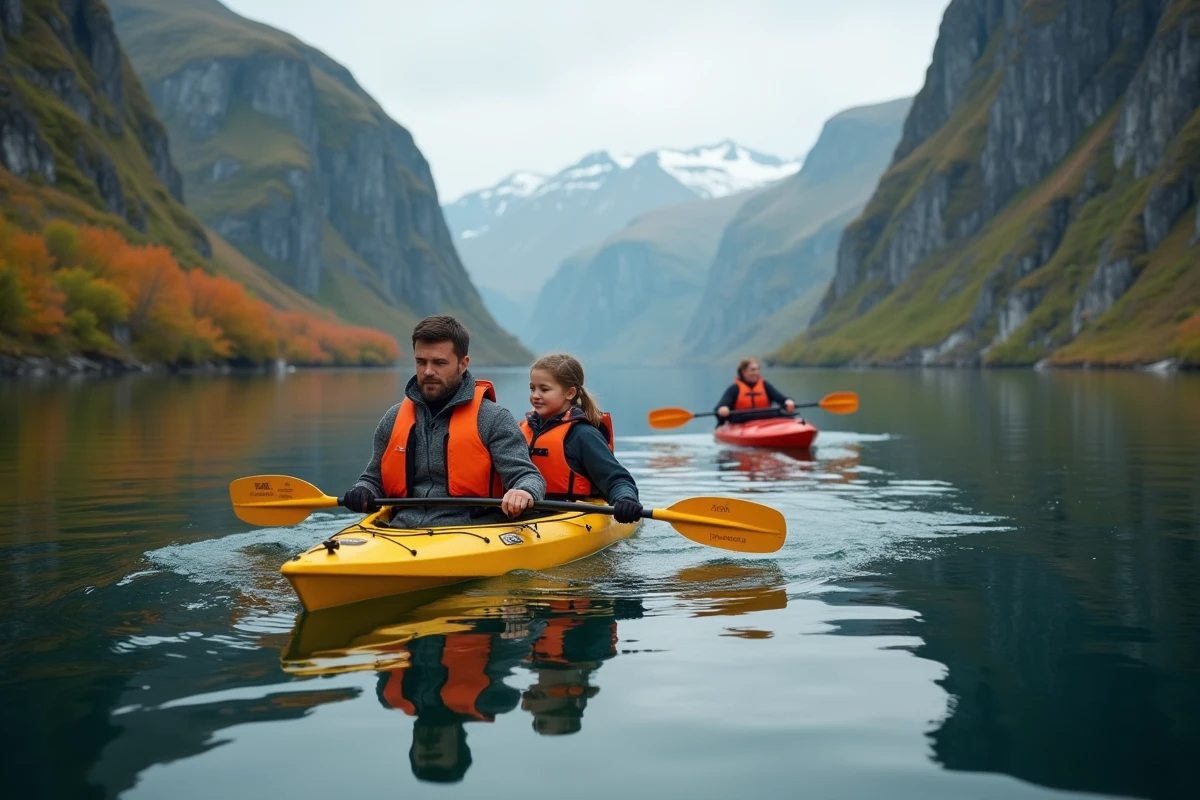
Guided kayaking trips are available in Svolvær and Reine. They sometimes accept children from eight or ten years old, depending on the providers. Checking the minimum age and weather conditions on the day itself remains the rule.
The Viking Museum of Borg
A reconstruction of a Viking longhouse, the Borg museum offers an interactive visit that works well with children. One can discover the Viking way of life through objects, reconstructions, and seasonal workshops. It’s a valuable alternative for a rainy or windy day.
Rental Car and Logistics: Preparing a Road Trip in Lofoten with Children
The car remains the most flexible means of transport for exploring Lofoten as a family. The E10 road, which crosses the archipelago, connects the main villages and allows for spontaneous stops in front of fjords or viewpoints.
- Picking up the rental car at Bodø or Svolvær airport simplifies organization. From Bodø, a ferry connects to Moskenes (in the south of the archipelago), allowing the journey to start in Reine.
- Plan for an appropriate car seat: rental companies offer them, but early booking is recommended in summer.
- Do not underestimate the distances. Despite the modest size of the archipelago, driving on winding roads with children takes more time than expected. Limiting trips to two or three hours per day maintains a serene atmosphere.
The midnight sun, present from late May to mid-July, often disrupts children’s sleep. Blackout curtains or a sleep mask for older ones help maintain a regular bedtime, even when the light never fades.
Family trips to Lofoten do not resemble a classic journey in Norway. The relative isolation of the archipelago, the pace dictated by the weather, and the constant light create a unique experience, provided one is willing to slow down and adapt each day to the desires of the youngest.