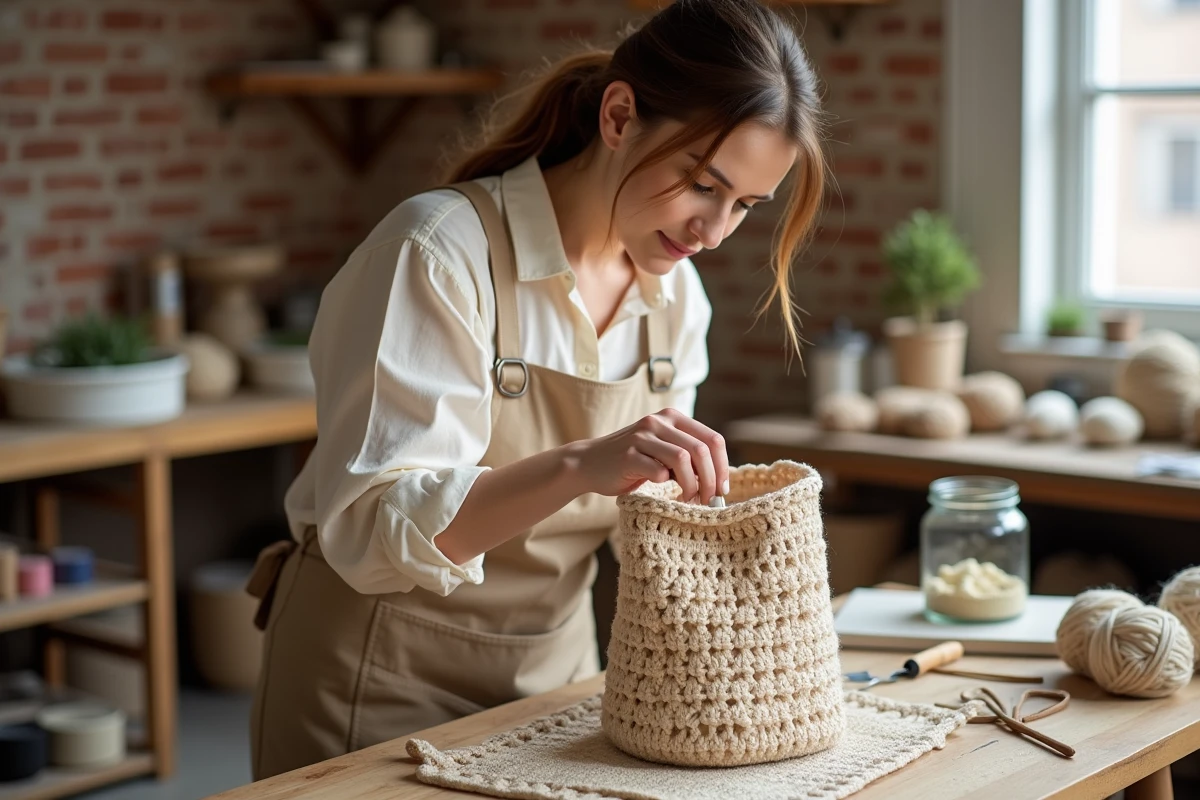
A crocheted bag made with tight stitches or double crochets, even if made with a dense yarn, will eventually sag as soon as you slip in a wallet, a phone, and a pouch. The problem does not stem from the stitch used or the tension of the yarn, but from the lack of internal structure. Reinforcing a crocheted bag means giving it an invisible skeleton that maintains its shape without turning the fabric into cardboard.
Internal structure or surface finish: two approaches to reinforcement that should not be confused
The most common confusion is treating rigidity as a single issue. In reality, two approaches coexist and produce different results.
The internal structure (interfacing, sewn lining, rigid base inserted) affects the overall shape of the bag. It prevents the walls from collapsing inward and keeps the bottom flat. This approach works best when considered from the design stage, before the final assembly.
The surface finish (starch, fabric glue, resin, varnish) acts on the fiber itself. It stiffens the yarn after crocheting, which gives a decent visual hold when the bag is empty or lightly loaded. Under real weight, the surface rigidity gives way faster than an internal structure.
For a bag intended for daily use, combining both approaches yields the best result. Applying a surface treatment to a bag that is already lined and reinforced at the bottom extends the hold well beyond what each method offers alone. Those who wish to delve deeper into the topic will find detailed techniques on rigid lining for crocheted bags on Allure Mode, particularly regarding the choice of interfacing suitable for each type of yarn.
Interfacing and lining for crocheted bags: choosing the right weight
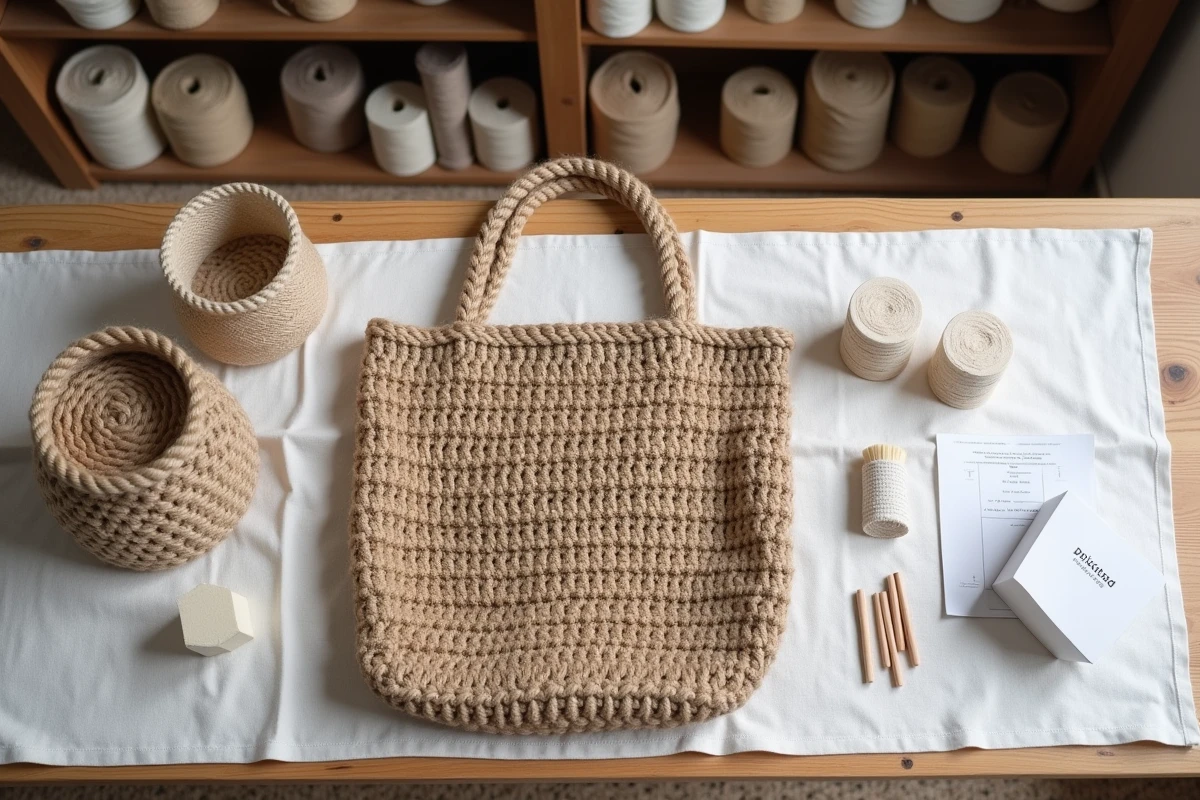
Interfacing is a fabric coated with heat-activated glue. When applied with an iron to a cotton lining, it creates a semi-rigid wall that is then inserted into the bag. The choice of weight radically changes the result.
- A lightweight interfacing is suitable for pouches and small evening bags. It adds just enough structure so that the fabric does not fold in on itself, without adding weight.
- A medium weight is appropriate for standard-sized bags (tote bags, handbags). It offers a compromise between rigidity and flexibility, and the bag remains comfortable to carry over the shoulder.
- A heavy weight is used for rigid baskets or market bags. The result is very structured, but the bag loses some lightness and flexibility.
A common mistake is choosing an interfacing that is too thick out of fear that the bag will sag. A weight that is sufficiently dense for a classic tote does not need to be cardboard-like. It is better to test a sample on a piece of lining before interfacing all the pieces.
Applying interfacing to a fabric lining
The interfacing is placed with the sticky side against the wrong side of the lining fabric. The iron should be set to no steam, at medium temperature. Press down in sections for a few seconds, without sliding, to avoid air bubbles.
Once the lining is interfaced, it is cut to the interior dimensions of the bag, with a seam allowance. It is then hand-stitched, using a slip stitch, along the upper edge of the bag. The interfaced lining acts as an invisible load-bearing wall: the outer crochet remains soft to the touch, but the wall no longer collapses.
Rigid base for crocheted bags: the piece that changes everything
A bag can have properly reinforced walls and still sag if the bottom is not treated. The bottom is the area that supports the entire weight. Without reinforcement, it deforms like a hammock and pulls the sides down with it.
Several materials work to create a rigid base. A thin plastic sheet (like a cut flexible binder), thick laminated cardboard, or a piece of thick felt slipped between the lining and the crocheted bottom is sufficient in most cases.
The rigid base should be removable before washing. Permanently fixing it complicates maintenance and eventually leads to deformations during drying. An open pocket sewn into the lining, at the base of the bag, allows for easy sliding in and removal of the plate.
Bag handles that stretch: a problem distinct from the rigidity of the body
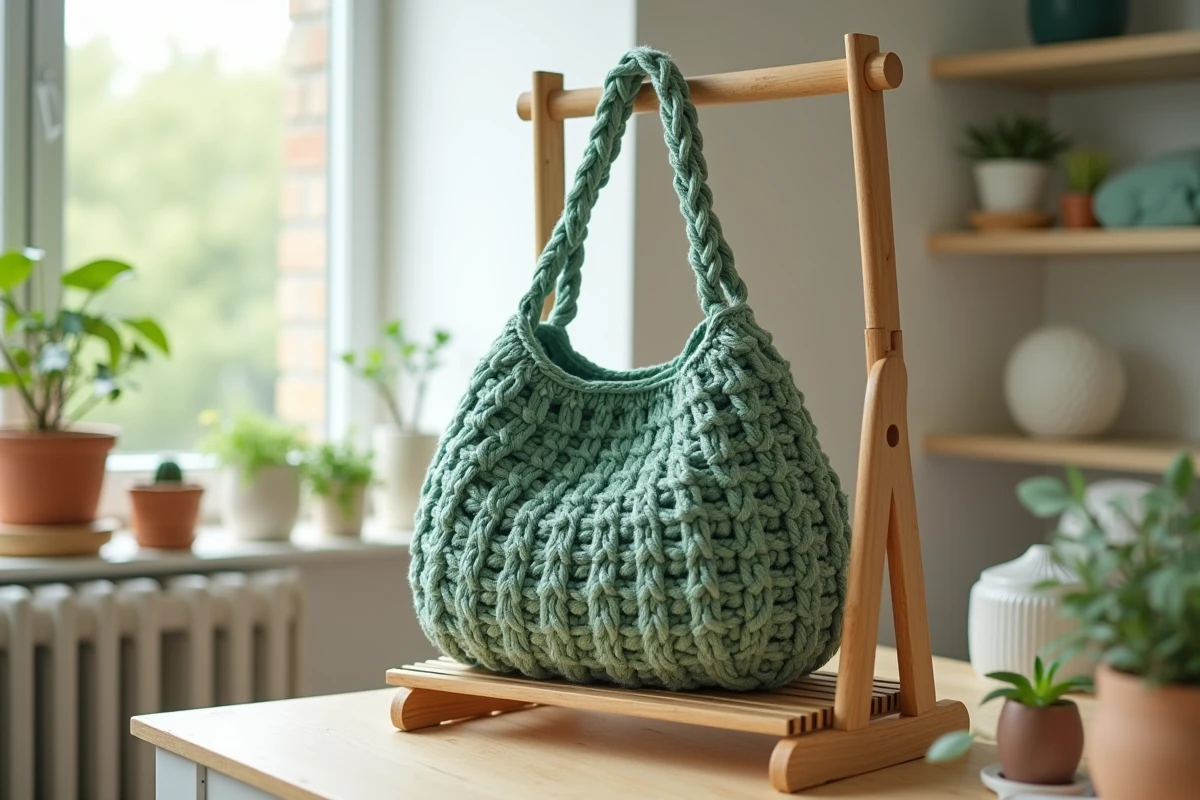
Reinforcing the walls and the bottom does not solve the problem of the handles. A crocheted handle made with tight stitches, even with a sturdy yarn, gradually stretches under load. After a few weeks of use, it can gain several centimeters, causing the bag to hang lower than expected.
Reinforcing handles without making them uncomfortable
The most reliable technique is to insert a woven cotton strap inside the crocheted handle. The handle is crocheted in a tube or double thickness, then the strap is slid inside before closing it off. The strap bears the tension, while the crochet remains visible on the outside.
Another option is to crochet the handle around a synthetic cord. The yarn wraps around the cord at each stitch, which prevents stretching from the outset. This method requires a bit more practice but produces a handle that hardly moves over time.
Starch and fabric glue for crocheted bags: limits to know
Starch (in spray or diluted in water) stiffens natural fibers like cotton or linen. The result is immediate and inexpensive. However, starch disappears at the first prolonged contact with moisture. A starched bag that gets caught in the rain loses its shape in a matter of minutes.
Fabric glue or fabric hardener offers more durable rigidity, but they alter the texture of the yarn. The bag becomes smoother, sometimes slightly shiny, and the stitches lose their characteristic relief. On natural cotton, the effect may be unappealing.
These surface treatments work better as a complement to an internal structure than as a standalone solution. Applying starch to a bag that is already lined and equipped with a rigid bottom improves the finish without relying entirely on the chemical treatment.
The choice of reinforcement method primarily depends on the intended use. A market bag loaded each week requires a thermally bonded lining and a removable bottom. An evening pouch can suffice with a starch treatment. Adapting the level of reinforcement to the actual contents of the bag, rather than its appearance when empty, remains the only way to achieve a lasting result.